
In a society where the question “Why should daughters be treated any less than sons?” is finally being answered with legal backing, daughters and property rights in India have undergone a revolutionary transformation. What was once a male-dominated inheritance system has evolved into a framework that recognizes women’s equal stake in family wealth. This comprehensive guide examines the current legal landscape, landmark judgments, and practical steps every daughter should know about claiming her rightful inheritance.
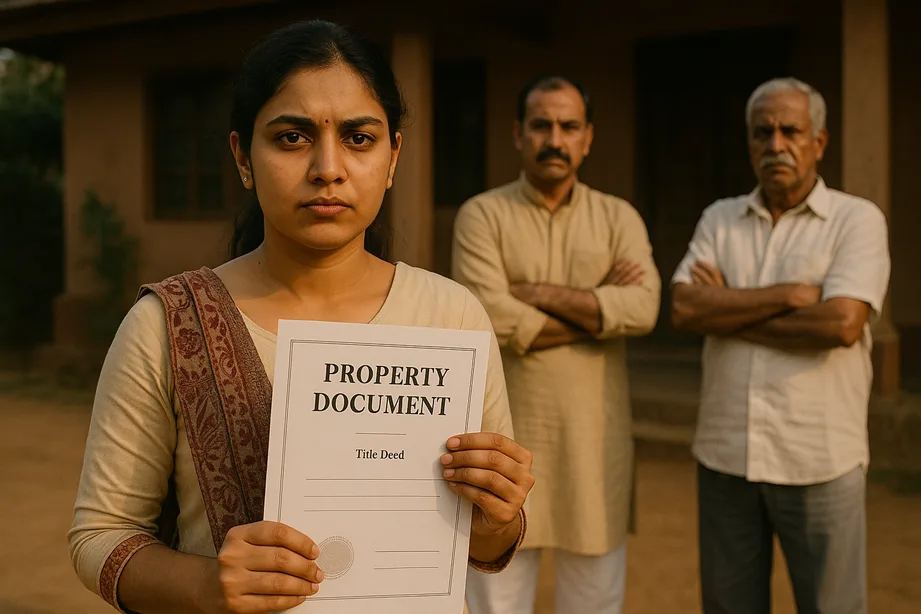
The journey toward equality in daughters and property rights in India reflects broader societal changes, challenging centuries-old patriarchal norms that relegated women to secondary status in property matters. Today’s legal framework empowers daughters with unprecedented rights, but awareness and implementation remain ongoing challenges.
Table of Contents
The Evolution of Legal Framework Governing Property Rights
The Hindu Succession Act, 1956: Foundation for Change
The original Hindu Succession Act of 1956 marked the first significant step toward codifying inheritance laws for Hindus, Buddhists, Jains, and Sikhs. However, this initial legislation reflected the gender biases of its time, treating daughters as inferior heirs compared to sons, particularly in matters of ancestral property.
Under the 1956 Act, daughters were not recognized as coparceners in Hindu Undivided Families (HUF), meaning they had no birthright to ancestral property. This exclusion perpetuated economic dependence and limited women’s financial autonomy, creating systemic disadvantages that persisted for decades.

The Revolutionary 2005 Amendment
The daughters and property rights in India landscape changed dramatically with the Hindu Succession (Amendment) Act, 2005. This landmark legislation introduced several groundbreaking provisions:
Equal Coparcenary Rights: Daughters became coparceners by birth, acquiring the same rights and liabilities as sons in ancestral property. This fundamental shift meant daughters could demand partition and manage joint family property independently.
Retroactive Application: The amendment applied to all daughters, regardless of when they were born, provided the ancestral property had not been partitioned before December 20, 2004. This retroactive effect ensured that generations of daughters could finally claim their rightful inheritance.
Marriage Neutrality: The 2005 amendment explicitly established that marriage does not affect a daughter’s inheritance rights. This provision dismantled the traditional notion that married daughters belonged exclusively to their husband’s family.
Landmark Supreme Court Judgments Shaping Modern Inheritance Law
Vineeta Sharma v. Rakesh Sharma (2020): The Game-Changer
The Supreme Court’s 2020 decision in Vineeta Sharma v. Rakesh Sharma represents the most significant judicial intervention in daughters and property rights in India. This landmark judgment resolved years of conflicting interpretations regarding the 2005 amendment’s scope.
Key Rulings from the Vineeta Sharma Case:
The Court unequivocally established that daughters acquire coparcenary rights by birth, irrespective of whether their father was alive when the 2005 amendment took effect. This ruling overturned earlier decisions that had created artificial barriers to daughters’ inheritance claims.
The judgment emphasized that coparcenary rights are birthright privileges that cannot be denied based on timing or circumstances surrounding the amendment’s implementation. This clarity eliminated legal ambiguities that had previously disadvantaged countless daughters seeking their inheritance.
Resolving Judicial Conflicts
Prior to Vineeta Sharma, conflicting Supreme Court decisions had created uncertainty in daughters and property rights in India. The 2016 Prakash v. Phulavati judgment had imposed restrictive conditions, requiring both father and daughter to be alive on September 9, 2005. However, the 2018 Danamma v. Amar case contradicted this position, creating legal confusion.
The Vineeta Sharma decision definitively resolved these conflicts, establishing a uniform interpretation that prioritizes daughters’ equal inheritance rights. This judicial clarity has profound implications for pending cases and future inheritance disputes.
Religious Personal Laws and Their Impact on Inheritance
Muslim Personal Law: Structured but Unequal Inheritance
Under Muslim personal law, daughters and property rights in India operate within a structured framework governed by Shariat principles. Muslim daughters are entitled to specific shares in their parents’ property, though these shares are traditionally half of what their male counterparts receive.
Key Features of Muslim Inheritance Law:
Muslim law recognizes daughters as legitimate heirs but provides them with fixed shares rather than equal portions. A sole daughter receives half her father’s property, while multiple daughters collectively receive two-thirds. When sons and daughters inherit together, daughters receive half the share of their brothers.
Importantly, marriage does not affect Muslim daughters’ inheritance rights. A Muslim daughter’s entitlement to her parents’ property remains intact regardless of her marital status, providing some security within the traditional framework.
Christian and Parsi Laws: Progressive Equality
Daughters and property rights in India under Christian law demonstrate remarkable gender equality. The Indian Succession Act, 1925, which governs Christian inheritance, provides equal rights to sons and daughters in their parents’ property.
Christian inheritance law operates on gender-neutral principles, ensuring that daughters receive equal shares in both ancestral and self-acquired property. This equality extends to all forms of inheritance, whether through intestate succession or testamentary disposition.
Parsi law, also governed by the Indian Succession Act, similarly provides equal inheritance rights to daughters and sons. The 1991 amendment to Parsi succession laws eliminated previous discriminatory provisions, ensuring complete gender parity in inheritance matters.
Practical Steps for Claiming Property Rights
Understanding Property Classifications
Successful navigation of daughters and property rights in India requires understanding different property types and their inheritance implications. Property classification significantly affects inheritance procedures and available legal remedies.
Ancestral Property: This includes property inherited through four generations of male lineage without partition. Daughters have birthright claims to ancestral property and can demand partition at any time.
Self-Acquired Property: Property purchased, earned, or gifted to an individual falls under this category. In the absence of a will, self-acquired property is divided equally among all legal heirs, including daughters.
Legal Procedures for Claiming Inheritance
Family Negotiations: The first step in claiming daughters and property rights in India often involves family discussions to reach amicable settlements. Many inheritance disputes can be resolved through transparent communication and mutual understanding.
Legal Documentation: Proper documentation is crucial for establishing inheritance claims. Daughters should gather property records, family trees, and other relevant documents to support their claims.
Partition Suits: When family negotiations fail, daughters can file partition suits in civil courts to enforce their inheritance rights. These legal proceedings can be complex but provide formal mechanisms for claiming rightful shares.
Common Myths and Legal Realities
Debunking Inheritance Misconceptions
Despite legal progress in daughters and property rights in India, several myths continue to influence family decisions and limit women’s access to inheritance.
Myth: Marriage Eliminates Inheritance Rights
Reality: Marriage has absolutely no impact on a daughter’s inheritance rights under Hindu law. Married daughters retain full coparcenary status and can claim their ancestral property shares.
Myth: Only Sons Can Inherit Ancestral Property
Reality: The 2005 amendment explicitly grants daughters equal coparcenary rights in ancestral property. Daughters can demand partition and manage family property with the same authority as sons.
Myth: Property Claims Destroy Family Harmony
Reality: Asserting legal rights represents a demand for equality, not family destruction. Many families have successfully navigated inheritance discussions while maintaining relationships.

Legal Protections Against Discrimination
Modern laws provide robust protections for daughters and property rights in India, including mechanisms to challenge discriminatory practices. Courts consistently strike down attempts to deny daughters their lawful inheritance through fraudulent means.
Women can challenge wills that appear to have been made under coercion or undue influence. Legal precedents support daughters’ rights to contest inheritance documents that unfairly exclude them from family property.
Challenges and Barriers to Implementation
Social and Cultural Obstacles
Despite legal advances in daughters and property rights in India, social acceptance remains uneven across different regions and communities. Traditional attitudes often discourage daughters from asserting their inheritance rights, perpetuating economic inequality.
Rural areas particularly struggle with implementing progressive inheritance laws, where customary practices may conflict with statutory provisions. Educational initiatives and awareness campaigns are crucial for bridging this implementation gap.
Economic and Practical Barriers
Many daughters face practical challenges in claiming their inheritance, including lack of awareness about legal rights and financial constraints in pursuing legal remedies. The complexity of property laws and lengthy court procedures can deter women from asserting their claims.
Legal costs and time requirements for inheritance disputes create additional barriers, particularly for women from economically disadvantaged backgrounds. Simplified procedures and legal aid programs could help address these challenges.
Future Outlook and Recommendations
Strengthening Legal Framework
The evolution of daughters and property rights in India continues with ongoing legal developments and policy initiatives. Recent Supreme Court judgments have consistently reinforced gender equality principles in inheritance matters.
Future legal reforms should focus on simplifying inheritance procedures and reducing barriers to claiming rightful shares. Standardized documentation requirements and expedited court procedures could improve access to justice for daughters seeking their inheritance.
Education and Awareness Initiatives
Comprehensive education about daughters and property rights in India remains essential for achieving practical equality. Legal literacy programs targeting women and families can help bridge the gap between legal rights and social implementation.
Community-based initiatives involving local leaders, legal professionals, and women’s organizations can effectively promote awareness about inheritance rights. These programs should address both legal provisions and practical steps for claiming property rights.
Frequently Asked Questions
Can a married daughter claim property in her father’s house?
What if my brother sold the property without my consent?
Can I claim property after my father’s death even if I didn’t live with him?
What if I never knew about my share in the property?
Do Muslim daughters get equal inheritance as Hindu daughters?
Can a father exclude his daughter from inheritance through a will?
What’s the difference between ancestral and self-acquired property?
Conclusion
The transformation of daughters and property rights in India represents one of the most significant legal and social advances in contemporary Indian society. From the foundational changes introduced by the 2005 amendment to the definitive clarity provided by landmark Supreme Court judgments, the legal framework now unequivocally supports gender equality in inheritance matters.
However, the journey from legal provision to practical implementation continues. While laws provide robust protections for daughters’ inheritance rights, social acceptance and awareness remain crucial for achieving true equality. Educational initiatives, simplified legal procedures, and continued judicial vigilance will determine how effectively these progressive laws translate into real-world benefits for India’s daughters.
The evolution of daughters and property rights in India reflects broader societal progress toward gender equality. As awareness grows and social attitudes evolve, more daughters will likely assert their rightful claims to family property, contributing to women’s economic empowerment and financial independence.
For every daughter questioning her inheritance rights, the law today provides clear answers: you have equal standing with your brothers, marriage does not diminish your claims, and the legal system supports your right to claim your ancestral and inherited property. The question is no longer whether daughters deserve equal treatment in property matters—the law has definitively answered that with a resounding yes.
[…] delays in family courts are particularly devastating for women seeking maintenance, property rights, or divorce. The Supreme Court has repeatedly criticized family courts for granting routine […]