
For decades, forensic scientists and curious minds have debated a crucial question: is there DNA in hair? More specifically, the question of whether no nuclear DNA in rootless hair remains a fundamental puzzle in forensic science. This widespread belief has dominated crime investigation practices and shaped how evidence is collected at crime scenes. However, recent breakthroughs in genetic technology have challenged this conventional wisdom, revealing that the answer is far more nuanced than the simple “no” most people believe.
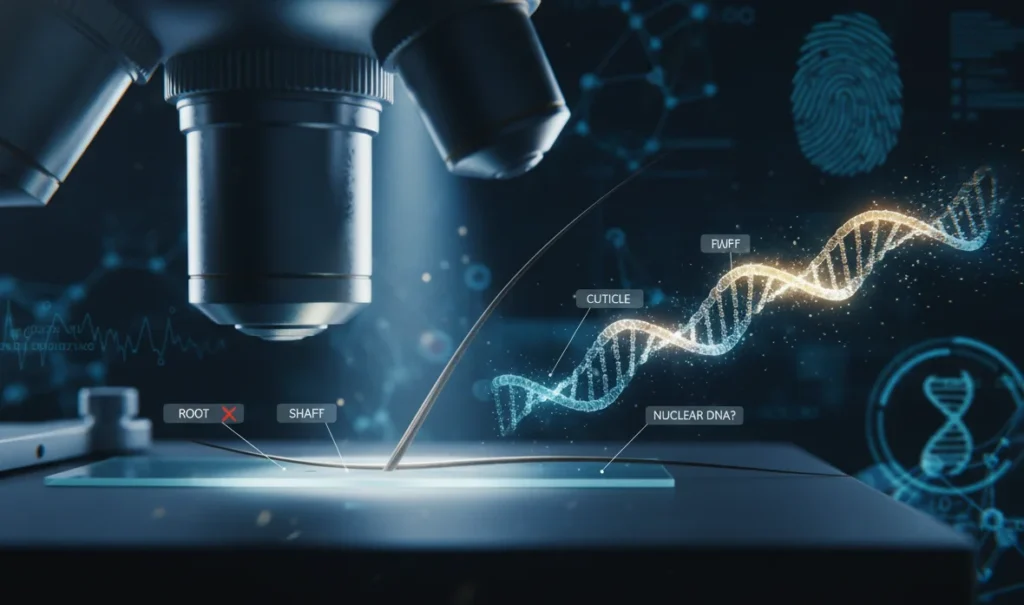
The assumption that rootless hair contains no DNA suitable for identification has long been accepted as gospel in forensic laboratories. Yet modern science tells a different story. Understanding whether is there DNA in hair—particularly in rootless hair shafts—requires us to distinguish between different types of DNA and recognize the revolutionary advances in extraction and analysis technology. The truth about DNA in rootless hair is not a simple yes or no; it’s a complex scientific narrative that blends traditional forensic limitations with cutting-edge genetic innovations.
Table of Contents
Understanding DNA in Rootless Hair: What Science Really Shows
What Exactly is Rootless Hair?
Before diving into whether no nuclear DNA in rootless hair is fact or fiction, let’s clarify what we mean by rootless hair. Rootless hair refers to hair shafts that have been shed naturally or collected without the hair follicle—the root structure at the base. When you lose hair naturally (telogen hairs), you often don’t get the follicle attached. This distinguishes rootless hair from pulled hairs, which typically retain the hair follicle containing living cells.
The structure of hair itself is fascinating. Hair consists primarily of a protein called keratin, which forms a tough, protective outer layer. Inside this shaft, you’ll find layers of cortex and medulla. The critical question for forensic science becomes: is there DNA in hair when the living root is absent? The answer depends entirely on which type of DNA we’re discussing.
Types of DNA: The Key to Understanding the Mystery
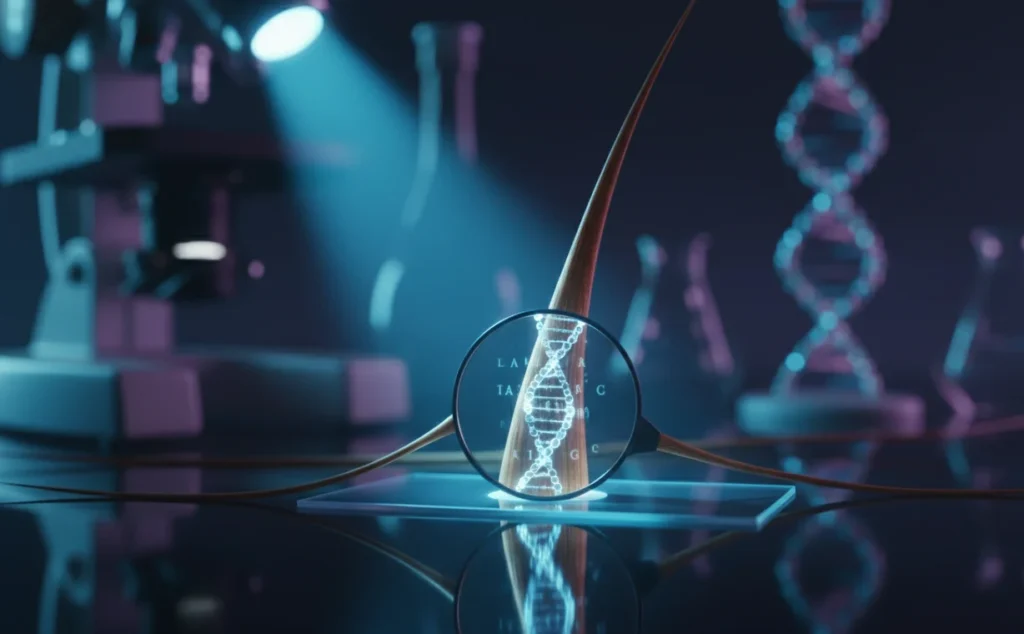
The confusion about no nuclear DNA in rootless hair stems largely from oversimplification. Hair contains two fundamentally different types of DNA: nuclear DNA and mitochondrial DNA (mtDNA). Understanding this distinction is essential to grasping why the traditional belief about rootless hair has been overturned.
Nuclear DNA is the DNA found in the nucleus of cells. It contains approximately 3 billion base pairs and provides the unique genetic fingerprint that forensic scientists have traditionally relied upon for individual identification. This is the DNA typically found in hair follicles and has been the gold standard for personal identification in forensic work.
Mitochondrial DNA, on the other hand, exists outside the cell nucleus in structures called mitochondria. Each cell contains hundreds to thousands of mitochondria, meaning there are many more copies of mtDNA than nuclear DNA in any given cell. This abundance makes mtDNA more likely to survive in degraded samples—including rootless hair.
The Historical Myth About Hair DNA: Why Scientists Believed No Nuclear DNA in Rootless Hair
The Origins of the Misconception
For nearly half a century, the forensic community operated under a fundamental assumption: is there DNA in hair without the root? The answer, they believed, was simply no. This belief wasn’t unfounded—it was based on legitimate scientific observations from earlier decades. When hair naturally sheds, the living cells at the root are typically left behind in the hair follicle. What remains is the keratinized shaft, which many scientists thought contained virtually no genetic material worth analyzing.
This led to what became known in forensic circles as the “conventional wisdom” about no nuclear DNA in rootless hair. Textbooks, training manuals, and courtroom testimony all reinforced this idea. The FBI’s hair analysis protocols, for instance, treated rootless hair as unsuitable for nuclear DNA profiling, relegating such samples to mitochondrial DNA analysis at best. This assumption shaped investigative practices worldwide and influenced how evidence was collected, stored, and analyzed at crime scenes.
The problem wasn’t that scientists were wrong about the challenge—rootless hair does present significant obstacles for DNA recovery. The problem was that they concluded it was impossible when it was merely difficult.
Why the Myth Persisted
Several factors contributed to the persistence of the myth that rootless hair contains no DNA suitable for identification. First, conventional forensic testing methods simply weren’t sophisticated enough to extract usable DNA from severely degraded samples. The PCR (polymerase chain reaction) technology that dominated forensic labs for decades required DNA fragments of a certain minimum length to work effectively. The fragments in rootless hair are often ultrashort—less than 75 base pairs—far too tiny for traditional PCR amplification.
Second, the confirmation bias within the forensic community meant that when rootless hair samples failed to yield results using standard methods, the failure was attributed to the absence of usable DNA rather than the inadequacy of the extraction method. It was easier to say “there’s no DNA here” than to continue pursuing alternative approaches.
Third, the forensic industry had already invested heavily in mitochondrial DNA analysis as an alternative for degraded samples. Once that alternative was established and validated, there was less incentive to push the boundaries of nuclear DNA recovery from rootless hair. The question of is there DNA in hair without a root seemed settled—there was mtDNA, and that was sufficient for certain applications.
The Reality of DNA in Rootless Hair: Challenging the Conventional Wisdom
Mitochondrial DNA: The Abundant Alternative
Modern research has definitively demonstrated that rootless hair absolutely contains DNA in hair, just not always in the form forensic scientists initially sought. Mitochondrial DNA is abundant in hair shafts. Studies have consistently shown that mtDNA recovery from hair shafts succeeds in over 92.5% of telogen (naturally shed) hair cases. This high success rate reflects the reality that the keratin structure of hair actually protects and preserves mtDNA remarkably well.
The implications are significant. If you ask “is there DNA in hair” in the form of mitochondrial DNA, the answer is an emphatic yes. The tough keratin that makes up the hair shaft, which many believed made the hair impenetrable to DNA analysis, actually serves as a protective cocoon preserving mtDNA against environmental degradation. This was a critical insight that emerged from paleogenetic research—scientists who had developed techniques to extract DNA from ancient remains tens of thousands of years old realized these same methods could work on degraded modern samples like rootless hair.
Mitochondrial DNA from rootless hair has proven invaluable in forensic investigations, particularly for exclusionary testing and genealogical investigations. While mtDNA cannot uniquely identify an individual (since it’s inherited maternally and shared among relatives), it can establish whether someone is related or, conversely, exclude them from suspicion. The abundance of mtDNA copies in hair makes it far more recoverable than nuclear DNA, even when the hair shaft is heavily degraded.
The Surprising Discovery: Nuclear DNA is Also Present
The most revolutionary finding in recent forensic research contradicts the foundational assumption underlying the myth about no nuclear DNA in rootless hair. Modern molecular analysis has revealed that nuclear DNA is not just present in rootless hair—it’s surprisingly abundant. Using advanced sequencing technology called “shotgun sequencing,” researchers discovered that nuclear DNA actually comprises more than 88% of the total DNA in shed hair samples, with some studies showing more than 95%.
This discovery fundamentally challenges the question of “is there DNA in hair when it’s rootless?” The answer is now clearly yes—there’s nuclear DNA present, though it exists in highly fragmented form. The fragments are typically ultrashort, measuring less than 75 base pairs, which explains why traditional forensic methods couldn’t access it. The DNA isn’t absent; it’s just in fragments too small for conventional analysis.
DNA in rootless hair is definitely real, but accessing it requires methods specifically designed to handle severely degraded, fragmented DNA. This is where next-generation sequencing (NGS) technology has become transformative. Rather than trying to amplify long stretches of DNA through PCR, NGS can work with thousands of tiny DNA fragments simultaneously, reconstructing genetic information from these ultrashort pieces.
Extraction Methods: How Scientists Access DNA in Hair
Traditional Extraction Failures
Understanding why conventional wisdom held that no nuclear DNA in rootless hair could be recovered requires understanding the limitations of traditional extraction methods. For decades, forensic laboratories used extraction protocols that worked well for hair follicles with their abundant living cells but failed dramatically with rootless hair shafts.
The traditional approach involved using proteinase K, an enzyme that breaks down proteins and cell membranes, allowing DNA to be released. This works when there are cellular structures to break down. In rootless hair, however, the cells have been completely keratinized—they’ve undergone a programmed degradation process where the DNA becomes fragmented and dispersed throughout the hair shaft structure. Simple enzymatic digestion couldn’t effectively extract this degraded DNA because it wasn’t contained in intact cells.
Furthermore, traditional forensic analysis aimed to amplify specific genetic markers—regions of DNA known to be variable between individuals. This targeted approach required DNA fragments of sufficient length to contain these markers intact. When the DNA was fragmented into pieces smaller than 75 base pairs, these markers were destroyed, making amplification impossible. This wasn’t evidence that DNA in hair was absent; it was evidence that the extraction and analysis methods weren’t appropriate for the sample type.
Modern Extraction Techniques: Breaking the Barrier
Recent breakthroughs have transformed what’s possible when extracting DNA in rootless hair. Forensic companies like Astrea Forensics adapted paleogenetic methods—techniques originally developed to recover DNA from ancient remains—to modern forensic challenges. These methods are specifically designed to handle severely degraded DNA samples with millions of ultrashort fragments.
The enhanced extraction methodology involves several key improvements. First, improved preprocessing steps ensure complete lysis (cell breakdown) of the tough hair structures, releasing all available DNA. Second, sophisticated purification processes isolate DNA while removing inhibitory substances that can interfere with analysis. Third, and most importantly, the analytical approach changed from trying to amplify long fragments to capturing and sequencing all available fragments, including the ultrashort ones that comprise the bulk of DNA in rootless hair.
One commercially available method, the InnoXtract kit, specifically targets recovery of small DNA fragments from challenging samples. Studies using this extraction chemistry have shown significantly improved allele recovery from rootless hair compared to traditional methods. The result: DNA in rootless hair that was previously considered unrecoverable is now successfully extracted, offering new possibilities for forensic investigations.
Next-Generation Sequencing: The Game-Changer for Rootless Hair Analysis
How NGS Revolutionized Hair DNA Analysis
The question of no nuclear DNA in rootless hair couldn’t have been conclusively answered without next-generation sequencing technology. NGS works on fundamentally different principles than traditional forensic analysis. Rather than attempting to amplify specific regions of DNA through PCR, NGS can sequence millions of DNA fragments simultaneously, including those that are too short for PCR amplification.
This technological shift is crucial for understanding is there DNA in hair recovered from crime scenes. With NGS, forensic scientists can now analyze hair samples by converting DNA fragments into a library of short sequencing reads. Even though each individual fragment might be degraded or ultrashort, the sheer number of fragments (often millions) provides sufficient information for genetic analysis. The computer processes these millions of tiny fragments and reconstructs genetic data suitable for forensic genealogy and identification.
Specific NGS-based systems have been developed specifically for rootless hair analysis. The massively parallel sequencing (MPS) approach allows laboratories to generate complete mitochondrial genome sequences from DNA in rootless hair reliably. More remarkably, modern NGS methods can now generate nuclear genome data from rootless hair that’s suitable for forensic genealogy—a capability that seemed impossible just a few years ago.
Success Rates and Real-World Applications
The practical impact of NGS on DNA in hair analysis is dramatic. A single five-centimeter segment of rootless hair now yields enough DNA data for forensic analysis in the vast majority of cases. Research shows that rootless hair samples consistently produce enough data (typically from 300 million sequence reads) to achieve 1-fold average genome coverage—sufficient to generate accurate genotypes for forensic comparison and genealogical database matching.
This represents a fundamental change in how crime scenes are investigated. Evidence that was previously considered worthless—loose hairs found at a crime scene—has become valuable. The ability to extract DNA in rootless hair using modern NGS methods has already contributed to solving numerous cold cases. The Golden State Killer case, solved through forensic genetic genealogy using advanced NGS analysis of degraded samples, demonstrates the real-world power of this technology.
DNA Composition in Hair: A Detailed Look
Where DNA Exists in Hair Shafts
Understanding exactly where DNA in hair is located helps explain both why the myth persisted and why it’s been overcome. The hair shaft isn’t a hollow tube—it contains cellular material throughout. When hair grows, specialized cells called keratinocytes in the hair follicle produce the hair structure through a process of rapid cell proliferation and gradual keratinization. As these cells differentiate and die, they create the hardened hair structure, and their DNA becomes dispersed throughout the shaft as fragments.
In the proximal (root-end) regions of rootless hair, the keratinization process is less complete, and more cellular DNA remains. This is why DNA in rootless hair yields are highest near the root and decline as you move toward the distal (tip) end. Studies show approximately a four-fold decrease in DNA quantity along the length of the hair shaft. However, even at the very tip of the hair, some DNA remains recoverable—a finding that contradicts the traditional belief in no nuclear DNA in rootless hair.
The distribution of DNA in hair isn’t uniform. Mitochondrial DNA tends to show more pronounced gradients from root to tip, while nuclear DNA distribution is somewhat more stable throughout the shaft length. This reflects the different biological origins and preservation characteristics of these two DNA types. Additionally, hair thickness, color, age (time since shedding), and whether the hair has been treated (dyed, bleached, etc.) all influence the quantity and quality of recoverable DNA.
Factors Affecting DNA Recovery from Rootless Hair
Several variables determine how much usable DNA in hair can be recovered from a rootless hair sample. Environmental exposure is significant—hair exposed to sunlight, moisture, or extreme temperatures degrades more quickly. This explains why hair recovered from outdoor crime scenes often yields less DNA than hair recovered from indoors, even when recovered shortly after a crime.
Hair characteristics also matter substantially. Thicker hairs generally contain more DNA than thin hairs. Pigmented hairs (darker hairs) often preserve DNA better than unpigmented hairs, partly because melanin provides some protective effect. The hair’s age—the time elapsed since it was shed—affects DNA in hair recovery, though surprisingly, studies show that DNA degradation plateaus after a certain period. Hair stored for decades can yield DNA comparable to recently shed hair, thanks to the protective keratin structure.
Whether the hair has been treated (dyed, permed, chemically bleached) reduces the quality of recoverable DNA in hair, though doesn’t eliminate it entirely. These treatments can damage both nuclear and mitochondrial DNA through oxidative stress, but enough residual DNA typically remains for modern analysis methods to work. This has important implications for forensic investigations, as it means evidence from various hair types and conditions may still be valuable.
Forensic Applications: How DNA Evidence from Rootless Hair Solves Crimes
Modern Forensic Genetic Genealogy
The question “is there DNA in hair from crime scenes?” has become not just a scientific curiosity but a practical tool revolutionizing criminal investigations. Forensic genetic genealogy—the application of direct-to-consumer DNA databases combined with genealogical research—has solved numerous cold cases using DNA recovered from rootless hair through advanced NGS methods.
When law enforcement submits DNA profiles from crime scene evidence to genealogical databases, they’re often using DNA in rootless hair analyzed through NGS. The genetic genealogy approach works by generating a genetic profile from the evidence, then searching genealogical databases like GEDmatch or FamilyTreeDNA to find relatives of the perpetrator. Through genealogical research, investigators can narrow the field to likely suspects, then request direct DNA samples for confirmation.
No nuclear DNA in rootless hair was the traditional obstacle preventing this approach. With modern technology, however, rootless hair has become a reliable evidence source. Single hairs found at crime scenes can now yield enough DNA data for genealogical matching. This has proven particularly valuable in cold cases where no obvious suspects existed or where evidence was collected before modern DNA analysis was available.
Paternity and Relationship Testing
Beyond criminal investigation, the ability to extract DNA in hair has applications for paternity testing and relationship verification. For this application, standard hair samples with intact follicles are ideal, but when follicles aren’t available, modern extraction methods have made rootless hair viable. A standard DNA test might use buccal swabs or blood, but in circumstances where these aren’t available or practical, hair can serve as an alternative sample source.
The advantage of hair as a DNA source is its non-invasive collection and stability. Hair doesn’t require special storage conditions like blood or saliva samples. This makes “is there DNA in hair” a practical question for various testing scenarios. Paternity testers and genealogical companies increasingly recognize DNA in hair as a legitimate sample type, though they typically prefer hair with intact follicles when possible.
Common Misconceptions About DNA in Hair
Myth #1: Hair Shafts Contain Zero DNA
This is perhaps the most fundamental misconception addressed by modern research. The belief that no nuclear DNA in rootless hair exists has been definitively disproven. Hair shafts contain both nuclear DNA (comprising more than 88% of total DNA) and mitochondrial DNA. The DNA is present; extraction simply requires appropriate methods.
Myth #2: Only Hair Roots Contain Usable DNA
While hair roots do contain higher-quality DNA in the form of follicle cells, the hair shaft itself contains substantial DNA. The question “is there DNA in hair shafts?” has been definitively answered affirmatively by modern science. Using NGS methods, laboratories now routinely recover useful genetic information from rootless hair shafts lacking any follicle material.
Myth #3: Rootless Hair DNA Can’t Be Used for Individual Identification
This myth has been partially dispelled by modern technology. While traditional forensic methods couldn’t reliably identify individuals from rootless hair, modern NGS approaches can generate genetic profiles suitable for forensic genealogy and database matching. The discriminatory power isn’t equivalent to nuclear DNA from hair follicles, but it’s substantial and has proven effective in solving cases.
Myth #4: Hair Color or Condition Eliminates DNA
Environmental damage and hair treatment (dyeing, bleaching) do reduce DNA quality and quantity, but they don’t eliminate it entirely. DNA in rootless hair remains recoverable even from treated hair, aged hair, or hair exposed to environmental stress. This has important forensic implications, as it means evidence can’t be dismissed based on hair appearance or condition alone.
FAQ: Your Questions About DNA in Rootless Hair Answered
Q: Is there DNA in hair that has been naturally shed?
Yes, absolutely. Naturally shed (telogen) hair contains both mitochondrial DNA and nuclear DNA. While the DNA is fragmented and degraded compared to DNA from hair follicles, modern extraction and analysis methods can successfully recover genetic information from rootless hair for forensic and genealogical purposes.
Q: Can rootless hair DNA be used to identify someone in court?
Modern NGS-based analysis of DNA in rootless hair has been used in forensic investigations, particularly through genetic genealogy approaches. However, the evidentiary standards vary by jurisdiction. Traditional nuclear DNA matching from hair follicles remains more straightforward for court use, but rootless hair DNA is increasingly accepted, especially when combined with genealogical research.
Q: How much rootless hair is needed for DNA analysis?
Typically, just a few millimeters of rootless hair shaft can yield sufficient DNA for modern analysis. A single rootless hair often contains enough mtDNA and fragmented nuclear DNA for analysis. However, larger samples (5-10 hairs) provide more robust results with higher confidence.
Q: What’s the difference between DNA from hair with roots versus rootless hair?
Hair follicles contain living cells abundant in nuclear DNA, making them the preferred evidence source for traditional forensic analysis. Rootless hair contains mostly fragmented DNA dispersed throughout the shaft. While more challenging to analyze, modern NGS methods have made DNA in rootless hair increasingly viable for forensic purposes.
Q: Can environmental exposure destroy DNA in rootless hair?
Extended exposure to sunlight, moisture, and heat can degrade DNA in hair. However, the protective keratin structure preserves DNA remarkably well. Even aged hair stored under poor conditions often yields recoverable DNA in hair using modern extraction methods.
Q: How reliable is genetic genealogy using DNA from rootless hair?
Genetic genealogy using DNA in rootless hair has proven reliable enough to solve multiple cold cases. The approach generates genetic profiles that can be matched against genealogical databases. Success depends on the quality of the recovered DNA, the size of the genealogical database, and the genealogical research skills of the investigator.
Q: Is there DNA in hair from people of all ethnicities and hair types?
Yes. While DNA recovery rates can vary slightly based on hair characteristics (thickness, pigmentation, treatment history), DNA is present in rootless hair from all ethnicities and hair types. Modern extraction methods work effectively across these variations.
Q: Can modern science truly extract DNA from rootless hair efficiently?
Modern NGS-based methods have made efficient DNA extraction from rootless hair possible. While “efficient” is relative—follicle DNA extraction remains more straightforward—contemporary technology routinely succeeds in recovering useful genetic information from rootless hair at crime scenes.
Conclusion: The Evidence is Clear
The question “No nuclear DNA in rootless hair: Myth or Fact?” has been definitively answered by modern science: it’s a myth. While conventional forensic wisdom held that rootless hair contains no usable DNA for individual identification, contemporary research demonstrates otherwise. Both nuclear and mitochondrial DNA exist in hair shafts in recoverable quantities.
The evolution from belief in no nuclear DNA in rootless hair to recognition of its presence and utility represents one of forensic science’s significant advances. What changed wasn’t the presence of DNA—it was always there—but rather the technology available to detect, extract, and analyze it. Modern next-generation sequencing, paleogenetic-derived extraction methods, and forensic genetic genealogy have transformed DNA in hair from an unreliable trace to a viable evidence source.
Understanding is there DNA in hair has moved from a simple “no” to a nuanced “yes, and here’s how to access it.” For crime victims and their families, this advancement means cold cases can potentially be solved. For forensic science, it represents the triumph of technological innovation over outdated assumptions. The myth that no nuclear DNA in rootless hair exists has been thoroughly dispelled, replaced by the scientific reality that hair—rootless or otherwise—is indeed a valuable source of genetic information.
As forensic technology continues advancing, the boundaries of what’s possible with DNA in rootless hair will continue expanding. What seems impossible today may become routine tomorrow, just as analyzing rootless hair for nuclear DNA once seemed impossible but now contributes to solving real crimes.
About the Author
Adv. Sanjay Sahu, specializing in forensic science, evidence law, and criminal justice, presently at NLSIU Bangalore, he bridges legal scholarship with scientific research to make complex topics accessible. His work focuses on evidence-based legal education, helping legal professionals and students understand emerging forensic technologies and their courtroom applications.
DONT MISS
Understanding Your Legal Rights After Buying a Used Car in the US
Legal Rights After Divorce in the US: Your Complete Guide to Post-Divorce Entitlements
The Right against Self Incrimination in India: Origins, Scope, and Contemporary Challenges