
Can a court force you to take a DNA test just because someone accuses you of cheating?
This is the central question that recently shook the legal corridors of the Supreme Court. For decades, Indian law has tried to balance the scientific truth of DNA tests with the personal right to privacy. But the recent judgment in R RAJENDRAN VS KAMAR NISHA AND OTHERS 2025 has drawn a firm red line in the sand.
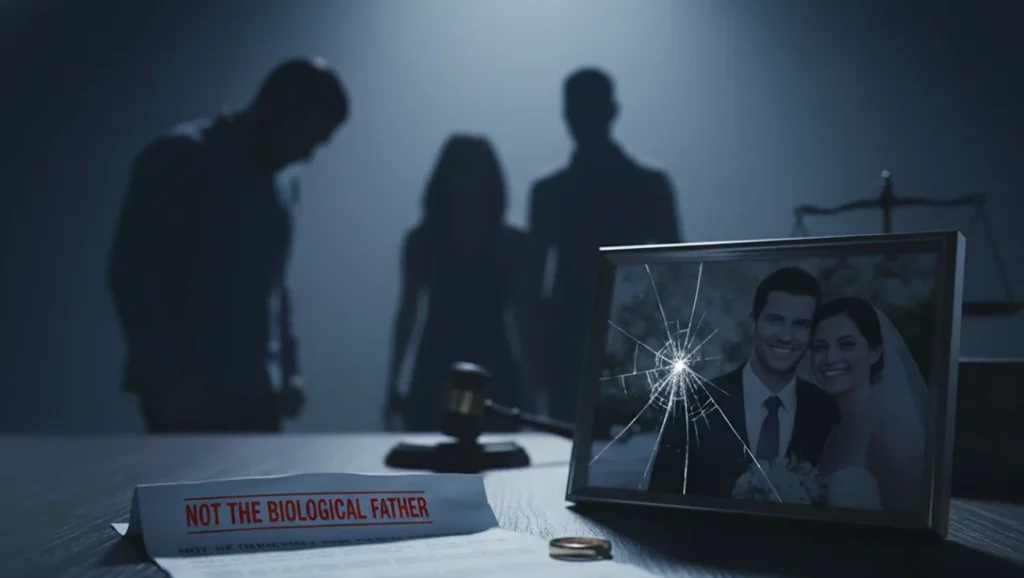
If you are a lawyer, a law student, or just someone interested in civil rights, understanding R RAJENDRAN VS KAMAR NISHA AND OTHERS 2025 is mandatory. This verdict isn’t just about one man refusing a medical test; it is a landmark precedent on how we view marriage, legitimacy, and the limits of police investigation in India.
do u know Difference Between Paternity and Legitimacy?
Read Can the Wife Inherit Any Property After Killing Her Husband?
Also Read 10 ways to get your Husband’s property Without killing Him
Table of Contents
The Facts Behind R RAJENDRAN VS KAMAR NISHA AND OTHERS 2025
To understand the ruling, we first need to look at the unique story that led to the R RAJENDRAN VS KAMAR NISHA AND OTHERS 2025 litigation.
The case began with a simple allegation of cheating. The complainant, a married woman, accused Dr. R. Rajendran of deceiving her. She claimed that despite being married to another man since 2001, she had an affair with the doctor, which resulted in the birth of a child. Years later, she filed a criminal complaint for cheating and harassment, claiming the doctor had reneged on promises to support her.
To prove her claim, she demanded that the doctor undergo a DNA test. The Madras High Court initially agreed, believing science should reveal the truth. However, the Supreme Court overturned this in the R RAJENDRAN VS KAMAR NISHA AND OTHERS 2025 judgment, emphasizing that you cannot use DNA tests as a shortcut to gather evidence in a case where paternity isn’t the primary crime.
The court noted a crucial fact: the woman was validly married to another man when the child was born. Under Indian law (Section 112 of the Evidence Act), this makes the child the legitimate son of her husband, not the lover. This legal “shield” became the turning point in R RAJENDRAN VS KAMAR NISHA AND OTHERS 2025.
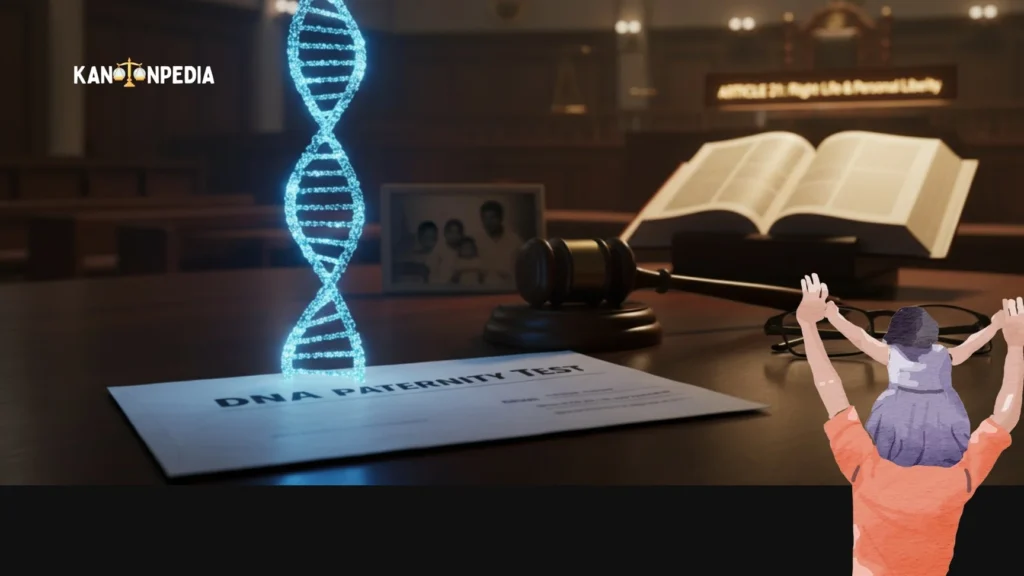
Why the Supreme Court Ruled Against DNA Testing in R RAJENDRAN VS KAMAR NISHA AND OTHERS 2025
The Bench, comprising Justices Prashant Kumar Mishra and Vipul M. Pancholi, used R RAJENDRAN VS KAMAR NISHA AND OTHERS 2025 to reiterate a “Twin Blockade” against casual DNA testing.
1. The “Fishing Expedition” Ban
The Court observed that the police and the complainant were using the DNA test to “fish” for evidence. In R RAJENDRAN VS KAMAR NISHA AND OTHERS 2025, the primary charge was cheating (Section 420 IPC). Proving paternity does not automatically prove cheating. The Court ruled that unless there is an “eminent need” where the test is essential to prove the core crime (like in rape cases), a judge cannot order it.
2. Protecting the Child and Privacy
Ordering a DNA test doesn’t just affect the alleged father; it impacts the child. If the test in R RAJENDRAN VS KAMAR NISHA AND OTHERS 2025 had gone ahead and shown the husband was not the father, the child would face the social stigma of being labeled “illegitimate.” The Supreme Court held that the law’s presumption of legitimacy is strong and cannot be overturned lightly.
Furthermore, relying on the Puttaswamy judgment, the verdict in R RAJENDRAN VS KAMAR NISHA AND OTHERS 2025 affirmed that forcing a biological sample from an accused violates their Right to Privacy under Article 21, especially when the evidence is merely collateral (secondary) to the main case.
Legal Impact: What Lawyers Must Learn from R RAJENDRAN VS KAMAR NISHA AND OTHERS 2025
For legal practitioners, R RAJENDRAN VS KAMAR NISHA AND OTHERS 2025 serves as a powerful defense tool. It establishes that magistrates cannot mechanically order forensic tests.
If you are defending a client in a similar situation, you can now cite R RAJENDRAN VS KAMAR NISHA AND OTHERS 2025 to argue that the burden of proof lies on the accuser to show “non-access” between the husband and wife. The Court made it clear: if the husband and wife lived together, the law assumes the husband is the father. You cannot bypass this legal presumption with a DNA test request.
This judgment effectively stops “roving inquiries.” It ensures that personal vendettas do not turn into intrusive medical investigations. The legacy of R RAJENDRAN VS KAMAR NISHA AND OTHERS 2025 will be the protection of citizens from unwarranted forensic intrusion in matters that are civil or matrimonial in nature, even if dressed up as criminal complaints.
The Bottom Line
The R RAJENDRAN VS KAMAR NISHA AND OTHERS 2025 verdict is a victory for privacy. It reminds us that while science (DNA) can tell us biological truths, the law is concerned with social stability and rights. By refusing the test, the Supreme Court has protected the sanctity of marriage and the dignity of the child.
Frequently Asked Questions (FAQ)
Q1: What is the main takeaway of the R RAJENDRAN VS KAMAR NISHA AND OTHERS 2025 judgment?
A: The main takeaway is that courts cannot order DNA tests in criminal cases (like cheating) if paternity is not a direct element of the crime. It upholds privacy over “roving inquiries.”
Q2: Can a wife ask for a DNA test to prove her lover is the father?
A: Generally, no. As reinforced in R RAJENDRAN VS KAMAR NISHA AND OTHERS 2025, if she was living with her husband during conception, the law presumes the husband is the father. This presumption is very hard to rebut.
Q3: Does this judgment apply to rape cases?
A: No. The Court distinguished this case from sexual offenses. In rape cases, DNA evidence is often directly linked to the crime. In R RAJENDRAN VS KAMAR NISHA AND OTHERS 2025, the charge was cheating, making the DNA test less relevant to the core offense.
Q4: How does R RAJENDRAN VS KAMAR NISHA AND OTHERS 2025 affect the Right to Privacy?
A: It strengthens it. The judgment declares that compelling a person to give a DNA sample without a strong, direct legal necessity violates their fundamental right to privacy under Article 21.
Q5: Why is this case important for Indian lawyers?
A: R RAJENDRAN VS KAMAR NISHA AND OTHERS 2025 is now the leading precedent to stop unnecessary DNA testing applications in matrimonial and cheating disputes, protecting clients from harassment.
Know what is Difference Between Paternity and Legitimacy ?
[…] Read Wife’s Hidden Lover Crushes Husband’s Fatherhood Dream! […]