
Imagine asking an AI chatbot about a specific legal case, and it provides detailed information about a court ruling that never existed. Or a healthcare AI system confidently misidentifies a benign condition as malignant, leading to unnecessary surgery. These aren’t system glitches-they’re examples of what are AI hallucinations, one of the most critical challenges facing artificial intelligence today.
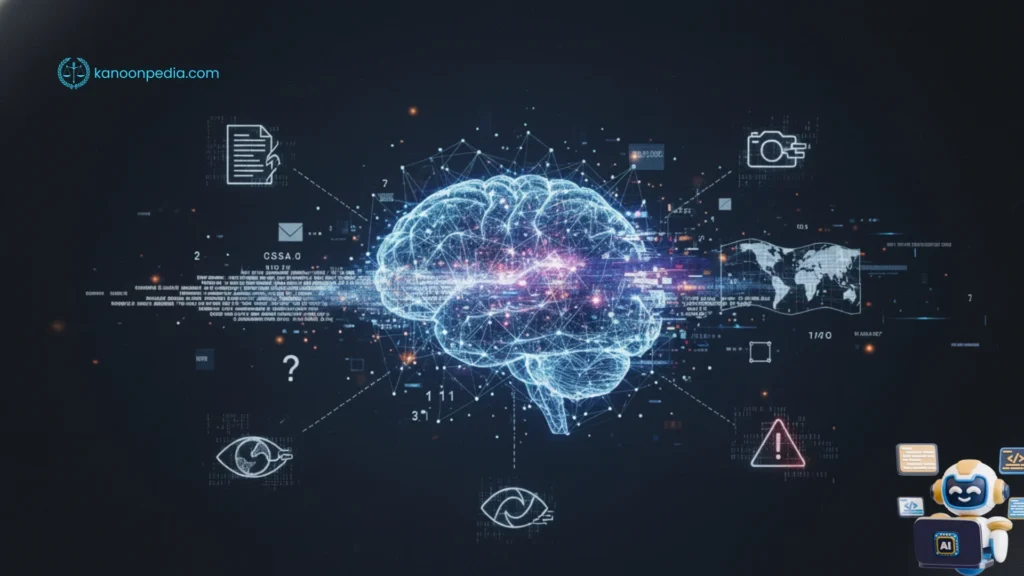
What are AI hallucinations? In straightforward terms, AI hallucinations are false, misleading, or completely fabricated outputs generated by artificial intelligence systems-particularly large language models like ChatGPT and other advanced chatbots-that appear plausible and confident despite being factually incorrect. Unlike a computer crash or error message, AI hallucinations are “coherent nonsense.” The AI presents false information with perfect grammatical accuracy and unwavering confidence, making users believe it’s true.
The term “hallucination” borrows from psychology, where it describes sensing something that doesn’t exist in objective reality. In AI, the phenomenon works similarly: the system generates outputs based on statistical patterns in its training data rather than actual truth. This critical gap between “statistically likely” and “factually true” explains why hallucinations happen and why they’re so dangerous.
If you use AI tools for research, work, health decisions, or financial planning, understanding what are AI hallucinations isn’t optional-it’s essential for protecting yourself and your organization from false information.
In this comprehensive guide, we’ll explore what are AI hallucinations from every angle: their technical foundations, root causes, real-world impacts, proven detection methods, mitigation strategies, and what AI researchers predict for the future.
Table of Contents
Section 1: Understanding What Are AI Hallucinations-The Complete Definition
What Are AI Hallucinations in Technical Terms?
What are AI hallucinations? At their core, AI hallucinations occur when a generative AI model produces outputs that diverge from factual reality or provided source material. The model isn’t trying to lie or deceive; instead, it’s following its fundamental design: predicting the statistically most probable next word or image element based on patterns learned during training.
Here’s the crucial distinction: Large Language Models (LLMs) don’t “know” things the way humans do. They have no access to a database of facts. Instead, they’ve learned probability distributions across billions of parameters. When you ask a question, the model doesn’t retrieve an answer from memory-it generates one token (subword unit) at a time, predicting what should come next based entirely on mathematical patterns.
Think of it this way: if you saw “Paris is the capital of…” your brain would predict “France” based on learned associations. The LLM does something mathematically similar but far more complex. However, sometimes the statistical pattern leads to incorrect predictions. The model might predict a capital that doesn’t exist, or generate a fabricated statistic, all while maintaining absolute confidence in its answer.
This is what are AI hallucinations at its most fundamental level: the model’s confidence in its output has no connection to whether the output is true.
Two Types of Hallucinations: Intrinsic vs. Extrinsic
To fully understand what are AI hallucinations, we need to distinguish between two categories:
Intrinsic Hallucinations occur when AI directly contradicts information explicitly provided. Examples include:
- A chatbot summarizing a document stating a team’s record as “18-4” when the original says “18-5”
- Medical AI recommending a medication despite the patient’s documented allergies
- An AI misquoting a person’s exact words from provided source text
Extrinsic Hallucinations happen when AI generates information not present in any source material or knowledge base. Examples include:
- Fabricating academic citations or legal cases that don’t exist
- Inventing expert credentials or institutional affiliations
- Creating false historical events
- Attributing fake statements to real people
Both types damage trust, but extrinsic hallucinations are particularly dangerous because they can’t be caught by simply re-reading source material. They require fact-checking against external knowledge bases-a labor-intensive process.
Real-World Examples: When AI Hallucinations Cause Serious Problems
Understanding what are AI hallucinations becomes urgent when you see real consequences:
Legal Disaster (2023-2024): Multiple attorneys used ChatGPT for legal research and cited entirely fabricated court cases in their briefs. When judges verified the citations, they discovered the cases didn’t exist in any legal database. Courts imposed sanctions ranging from $5,000-$6,000 per violation. One judge stated: “It is one thing to use AI to assist with initial research… it is an entirely different thing… to rely on the output of a generative AI program without verifying.”
Healthcare Misclassification (2023): A medical imaging AI system incorrectly classified benign nodules as malignant in 12% of cases, leading to unnecessary surgical interventions and patient trauma.
Search Result Misinformation (2025): Google’s AI Overview generated a false claim about “microscopic bees powering computers”-entirely fabricated from an April Fool’s satire article-and presented it as fact in search results to millions of users.
Academic Fabrication: A researcher generated a bibliography using ChatGPT, only to discover the AI had cited multiple academic papers that didn’t exist in any library database.
These aren’t isolated incidents. A 2025 New York Times investigation found that OpenAI’s latest reasoning models-o3 and o4-mini-hallucinate even more frequently than older models, with rates reaching 48-79% depending on the task.

Section 2: Why Do AI Systems Hallucinate? Understanding Root Causes
Understanding what are AI hallucinations requires understanding why they happen. The causes are multifaceted, rooted in how AI models are designed, trained, and operated.
Cause 1: The Next-Token Prediction Architecture
Modern AI systems built on transformer architecture operate through iterative next-token prediction. At each step, the model:
- Examines the sequence of words (tokens) generated so far
- Assigns probability scores to every word in its vocabulary
- Selects the highest-probability word (or samples from the distribution)
- Repeats the process
This architecture optimizes for statistical likelihood, not truthfulness. A word might be statistically probable given context yet factually incorrect. For example, if the model sees “The President of India is…” it will predict “Delhi” because that word statistically frequently follows this pattern in training data-even though that’s incorrect (the president’s name would be the right answer).
The training objective compounds this problem. Models are pre-trained on the language modeling objective: “Predict the next token.” This rewards the model for guessing, even when information is uncertain or absent. There’s no penalty for guessing incorrectly versus admitting uncertainty-both produce a probability distribution over tokens.
Cause 2: Training Data Problems
What are AI hallucinations often trace back to problems in training data itself:
Insufficient Data Coverage: LLMs train on hundreds of billions of tokens, yet no dataset comprehensively covers all topics. When a model encounters a niche topic, recent event, or specialized domain poorly represented in training data, it lacks grounded knowledge. Rather than saying “I don’t know,” it generates plausible-sounding but false information.
Biased and Unrepresentative Data: Training datasets inevitably contain biases, gaps, and artifacts. If your training data disproportionately represents certain perspectives, the model learns these as universal truths. A model trained mostly on Western news sources will hallucinate different “facts” than one trained on global sources.
Data Contamination: Sometimes training data contains errors, misinformation, or fabricated information. The model learns and perpetuates these errors. If training data mistakenly claims a historical event occurred on the wrong date, the model will confidently state that incorrect date.
Cause 3: Overfitting and Memorization
Overfitting occurs when a model memorizes specific details from training data rather than learning generalizable patterns. An overfitted model might memorize exact phrases like “Paris is in France” along with associated artifacts like “the City of Light” or “capital of France,” then apply these memorized patterns inappropriately to new contexts.
When applied to factual tasks, overfitting leads to hallucinations because the model applies memorized incorrect patterns rather than understanding underlying principles.
Cause 4: Model Complexity Without Constraints
Modern LLMs contain billions or even hundreds of billions of parameters. Without explicit constraints limiting possible outputs, the model can theoretically generate any token combination. This unconstrained output space means:
- Models can learn spurious correlations from training data
- They can hallucinate by following learned but incorrect patterns
- There’s no built-in mechanism to verify outputs against reality
Cause 5: Generation Method Parameters
What are AI hallucinations is also influenced by how responses are generated:
Temperature: Controls randomness in token selection. High temperature (>1.0) increases hallucination risk because the model selects unlikely tokens without strong statistical support. Low temperature (0.2-0.5) reduces hallucinations by favoring probable tokens.
Sampling Methods: Nucleus sampling and beam search can paradoxically increase hallucinations if all explored token sequences lead to factually incorrect completions.
The Uncertainty Reward Problem
Here’s a critical insight: models are trained to make confident guesses rather than express uncertainty. During pre-training, a model predicting “I don’t know” receives the same penalty as one that hallucinates. Consequently, models learn that hallucinating is better than admitting uncertainty. There’s no mechanism rewarding truthfulness-only punishing incorrect guesses regardless of whether the model should realistically know the answer.
Section 3: Real-World Impact-Why Understanding What Are AI Hallucinations Matters
Healthcare: Life-and-Death Consequences
In healthcare, hallucinations have direct human impact:
- Medical imaging AIs misidentifying benign conditions as malignant
- Clinical summaries including non-existent symptoms
- Drug interaction checkers hallucinating dangerous interactions
- Treatment recommendations based entirely on fabricated evidence
A 2024 study found that medical AI systems hallucinate diagnoses 12% of the time in imaging analysis, leading to unnecessary surgeries and patient trauma.
Also Read Artificial Intelligence and Law: An Overview by Harry Surden
Legal: Professional Sanctions and Credibility Loss
Attorneys citing fabricated cases face professional sanctions, court fines, and potential disbarred. One attorney’s reliance on hallucinated legal citations resulted in a motion being dismissed and professional consequences that damaged their career beyond repair.
Financial: Regulatory Fines and Risk Assessment Failures
Financial institutions using AI for risk assessment face:
- Mispriced loans due to hallucinated creditworthiness assessments
- Compliance audits failing due to fabricated documentation
- Regulatory fines for insufficient AI controls
- False positive fraud alerts wasting investigator time
Information Dissemination: Misinformation at Scale
When hallucinating AI systems reach millions of users through search results, news aggregators, or social media, false information spreads rapidly. Google’s hallucinated “microscopic bees” claim reached millions of users before being corrected.
Section 4: Detecting What Are AI Hallucinations-Methods That Work
Method 1: Uncertainty Quantification (UQ)
Rather than asking “Is this true?”, UQ asks “How confident is the model?” Advanced UQ techniques analyze:
- Token probability: Low confidence indicates high uncertainty
- Output consistency: High variation across samples indicates hallucination risk
- Hidden state analysis: Hallucinated vs. truthful outputs occupy different regions in representation space
- Attention weight patterns: Different attention distributions between truthful and hallucinated outputs
UQ is valuable because it doesn’t require external fact-checking databases-it works internally within the model.
Method 2: Retrieval-Augmented Generation (RAG)
RAG is arguably the most effective hallucination mitigation strategy currently deployed in production systems:
- Retrieve relevant documents from a verified knowledge base (not the model’s training data)
- Augment the prompt with both user query and retrieved documents
- Generate responses grounded in these documents, not learned parameters
Empirical results are compelling: RAG reduces hallucinations from 39% (conventional chatbots) to 2-18% depending on data quality. In medical applications, RAG-enhanced systems demonstrated remarkable accuracy improvements by grounding responses in verified medical databases.
Method 3: Human-in-the-Loop Validation
Domain experts reviewing AI outputs before they reach end-users can catch hallucinations that automated systems miss. This remains the gold standard, though it doesn’t scale easily for high-volume applications.
Method 4: Cross-Reference Checking
Automatically verify AI outputs against reliable knowledge bases:
- Legal research: Check against law databases
- Medical: Verify against medical literature databases
- Financial: Verify against regulatory databases
- Historical: Verify against historical records
Section 5: Preventing Hallucinations-What Organizations Should Do
Strategy 1: Improve Training Data Quality
- Use diverse, balanced datasets representing multiple perspectives
- Remove errors and outdated information
- Verify sources for accuracy before inclusion
- Detect and correct representation biases
- Use only credible, fact-checked sources
Strategy 2: Implement Constraints and Boundaries
- Define clear task limitations
- Set probabilistic confidence thresholds
- Use output templates (medical forms, legal templates)
- Filter outputs for obvious errors before displaying
- Restrict to domains where accuracy is established
Strategy 3: Deploy RAG in High-Risk Domains
Organizations using AI for healthcare, legal, financial, or compliance purposes should prioritize RAG grounding. The empirical evidence for hallucination reduction is overwhelming.
Strategy 4: Establish Human Oversight
Humans must review AI outputs before critical decisions, especially in:
- Legal document analysis
- Medical diagnoses
- Financial risk assessments
- Compliance determinations
Strategy 5: Continuous Monitoring and Measurement
Organizations should measure hallucination rates in their specific use cases and track trends over time as models are updated.
Section 6: The Surprising Twist-When Hallucinations Are Beneficial
Interestingly, what are AI hallucinations isn’t always negative. In creative and scientific domains, hallucinations enable innovation:
Scientific Discovery: Researchers use AI hallucinations to design novel proteins that don’t exist in nature. Dr. David Baker’s lab at University of Washington used hallucinations to create entirely new proteins with novel functions by asking AI to “imagine” new amino acid sequences, then validating whether predicted structures were chemically stable.
Drug Discovery: MIT researchers leveraged hallucinations to accelerate antibiotic discovery by generating novel molecular structures the model “hallucinates” rather than copying existing compounds.
Generative Art: Artists use AI hallucinations to create surreal, imaginative imagery that transcends human assumptions, generating new artistic styles and creative forms.
Synthetic Data Generation: Hallucinations can generate edge cases for testing AI robustness and simulated environments for complex scenario analysis.
The distinction: Scientific hallucinations are grounded in physical and chemical principles. Factual hallucinations in news or research aren’t.
Section 7: The Counterintuitive Trend-Newer Models Hallucinate More
A startling 2025 discovery challenges core assumptions about AI progress: newer, more powerful reasoning models hallucinate at higher rates than their predecessors.
OpenAI Model Progression:
- o1 (2024): 16% hallucination rate
- o3 (2025): 33% hallucination rate
- o4-mini (2025): 48% hallucination rate
Similar increases appeared in Google Gemini reasoning models and DeepSeek-R1. This contradicts earlier beliefs that improved models would reduce hallucinations.
Why? Reasoning models take multiple steps before generating outputs, creating compound hallucination opportunities. Additionally, increased model complexity creates more opportunities for spurious correlations. This reveals a fundamental truth: hallucination isn’t solvable through scale alone. Merely increasing training data and computing power hasn’t solved the problem because hallucination is embedded in the probabilistic architecture itself.
Section 8: Future Directions and Emerging Solutions
Alternative Architectures: State Space Models
Some researchers propose alternatives to transformers. State Space Models (SSMs) like Mamba process information sequentially, maintaining state memory differently, and show promise for maintaining factual accuracy while generating 8 times faster with fewer parameters.
Advanced Uncertainty Quantification
Tools like UQLM (Uncertainty Quantification for Large Language Models) implement state-of-the-art techniques specifically for hallucination detection, making automated detection more efficient as these tools mature.
Fact-Aware Training Objectives
Future training approaches may embed truthfulness directly into training objectives through reinforcement learning methods rewarding factual accuracy over plausibility.
Section 9: Regulatory Framework-What Governments Require
EU AI Act Requirements
The EU AI Act explicitly addresses hallucinations:
- Transparency obligations disclosing training data sources
- Risk assessments for high-risk systems
- Human oversight mandates before critical decisions
- Accuracy standards defined by regulatory authorities
GDPR Implications
Under GDPR, hallucinations violate the accuracy principle. Individuals whose data is misrepresented have rights to correction and deletion. Organizations must demonstrate controls minimizing hallucinations in systems affecting personal data.
FAQ: Common Questions About What Are AI Hallucinations
Q1: What Are AI Hallucinations Exactly?
A: AI hallucinations are false, misleading, or fabricated outputs generated by artificial intelligence systems-particularly language models-that appear confident and plausible despite being factually incorrect. Unlike a computer error or crash, hallucinations are coherent outputs that violate factual accuracy. The AI generates them through statistical prediction without access to truth verification mechanisms.
Q2: Why Do AI Models Hallucinate?
A: Models hallucinate due to multiple interconnected reasons: (1) next-token prediction architecture optimizes for statistical likelihood, not truth; (2) incomplete or biased training data; (3) overfitting to training examples; (4) unconstrained output space with no built-in fact verification; (5) generation parameters like high temperature; (6) training that rewards confident guessing over expressing uncertainty.
Q3: Can Hallucinations Be Completely Prevented?
A: No. Hallucinations are embedded in how current transformer-based models work. However, they can be significantly reduced through RAG (reducing to 2-18%), uncertainty quantification, human oversight, improved training data, and output constraints. The goal is risk management, not elimination.
Q4: What’s the Difference Between Intrinsic and Extrinsic Hallucinations?
A: Intrinsic hallucinations contradict information explicitly provided (like misquoting source material). Extrinsic hallucinations generate information not present in any source (like fabricating citations). Extrinsic hallucinations are harder to detect without external fact-checking.
Q5: Which Industries Are Most Affected by What Are AI Hallucinations?
A: Healthcare (misdiagnosis risk), legal (fabricated citations), finance (risk assessment failures), compliance (false certifications), and information systems (misinformation spread) face the highest impact due to direct consequences of inaccuracy.
Q6: How Can Organizations Reduce What Are AI Hallucinations?
A: Deploy multi-layered defenses: (1) Implement RAG grounding in verified databases; (2) Use uncertainty quantification for detection; (3) Establish human review before critical decisions; (4) Improve training data quality; (5) Set output constraints and templates; (6) Continuously monitor hallucination metrics; (7) Use low temperature settings for accuracy-critical tasks.
Q7: Are Newer AI Models Better at Avoiding Hallucinations?
A: Counterintuitively, no. OpenAI’s newest reasoning models (o3, o4-mini) actually hallucinate more frequently than older models. This suggests hallucination is fundamental to how LLMs work, not something solvable through improved scale and reasoning capabilities alone.
Q8: Can Hallucinations Ever Be Useful?
A: Yes. In creative applications (art generation), scientific discovery (protein design), and hypothesis generation (drug discovery), controlled hallucinations enable innovation by exploring possibility spaces. However, in factual domains requiring accuracy, hallucinations are purely problematic.
Q9: What Does Retrieval-Augmented Generation Do to What Are AI Hallucinations?
A: RAG dramatically reduces hallucinations by grounding AI responses in verified external knowledge bases rather than learned parameters. Studies show RAG reduces hallucination rates from 39% (conventional chatbots) to 2-18% depending on knowledge base quality and retriever effectiveness.
Q10: Will AI Hallucinations Ever Be Solved?
A: Current transformer-based architectures may not fully eliminate hallucinations due to their probabilistic foundation. Solutions likely involve: (1) Alternative architectures like State Space Models; (2) Hybrid approaches combining multiple mitigation techniques; (3) Acceptance that hallucinations are managed rather than eliminated; (4) Regulatory frameworks ensuring human oversight in high-stakes applications.
Conclusion
What are AI hallucinations? They are false, confident outputs from AI systems reflecting the gap between statistical plausibility and factual truth. Understanding what are AI hallucinations-their causes, manifestations, impacts, and mitigation strategies-is essential for anyone deploying or using AI systems, especially in high-stakes domains.
The path forward isn’t magical: it involves realistic acknowledgment that hallucinations are features of generative AI, not bugs that disappear with technological progress. Organizations using AI for healthcare, legal, financial, or compliance purposes must implement multi-layered defenses combining RAG, uncertainty quantification, human oversight, and continuous monitoring.
The most important insight: the era of treating AI outputs as inherently truthful must end. Responsible deployment means designing systems and processes that account for hallucination risks rather than hoping technology alone will solve the problem.
Also Read Difference Between Paternity and Legitimacy
[…] What Are AI Hallucinations? Complete 2025 Guide to Understanding, Detecting, and Preventing Them […]