
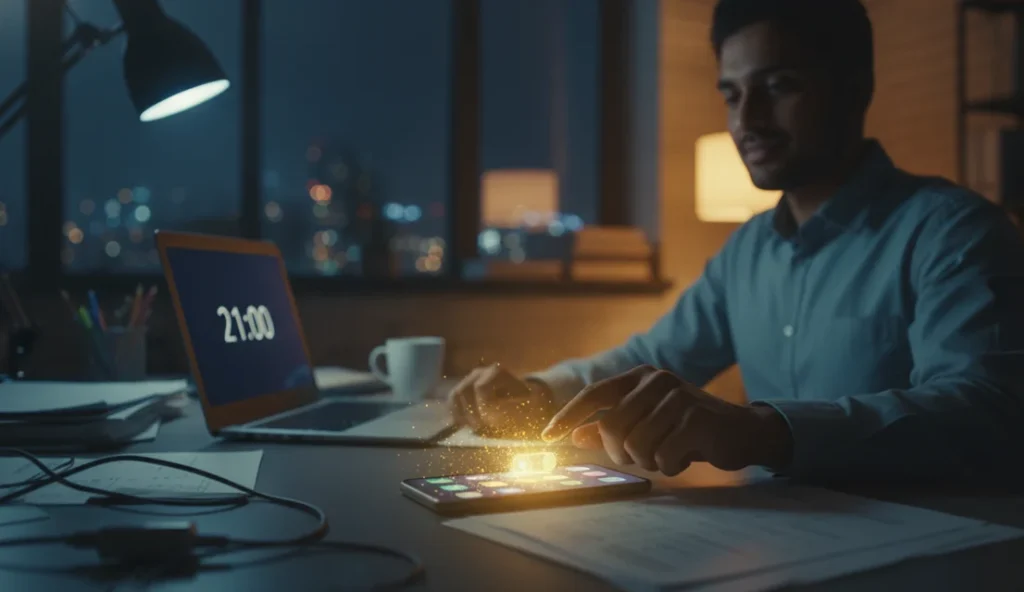
Imagine finishing your work at 5 PM, putting away your laptop, and then—ding, ding, ding—your phone keeps buzzing with work messages, emails, and calls. Your boss asks you to fix something “quickly,” a colleague pings you on WhatsApp, and suddenly your entire evening is gone. This is the reality for millions of employees in India, and that’s exactly why the Right to Disconnect Bill exists.
In simple terms, the Right to Disconnect Bill is a law that gives employees the legal right to refuse work-related calls, emails, and messages after their official work hours without facing any punishment. It’s like putting a “Do Not Disturb” sign on your personal time that your employer legally has to respect.

The concept isn’t new globally—countries like France, Spain, Australia, Belgium, and Portugal have already implemented it. But for India, this is groundbreaking. In December 2025, Nationalist Congress Party (NCP) MP Supriya Sule reintroduced this bill in the Lok Sabha after six years, and Kerala became the first state to introduce its own version. If you’re wondering why this matters to you, read on!
Table of Contents
What is Right to Disconnect Bill Really About? The Core Features Explained
Think of the Right to Disconnect Bill as a protective boundary between your job and your life. Here are the main things it proposes to do:
1. Your Right to Ignore Work Communications After Hours
The most important feature: you can legally refuse to respond to work calls, emails, WhatsApp messages, and Teams notifications once your working hours are over. And here’s the key part—your employer cannot punish you for not replying.
Imagine your boss sends you a message at 9 PM on Friday. Under this bill, you can completely ignore it without worrying about getting a negative performance review or being passed over for a promotion.
2. Creation of an Employees’ Welfare Authority
The bill proposes setting up a government body (Employees’ Welfare Authority) that would:
- Develop a national charter defining healthy work-life boundaries
- Conduct studies to measure how much after-hours work is actually happening
- Help spread awareness about using digital tools responsibly
- Make sure companies actually follow the rules
3. Customized Negotiation Between Companies and Employees
Here’s where it gets interesting: the bill recognizes that not all jobs are the same. A software developer at a startup might have different needs than someone in customer service. So the bill requires:
- For companies with 10+ employees: Formal negotiations between management and employees to decide what “after-hours communication” means for that specific workplace
- Clear written agreements about when employees can be contacted for emergencies
4. Overtime Payment for After-Hours Work
If you do agree to work after hours, you deserve to be paid for it. The bill ensures that any work done outside mutually agreed working hours gets paid at the regular wage rate (not a reduced rate).
5. Strict Penalties for Rule-Breaking
Companies that don’t follow the rules face fines of 1% of their total employee payroll. For a company with 100 employees earning ₹30,000 each per month, that’s a ₹3 lakh fine. This makes employers take the bill seriously.
6. Digital Detox Centers and Counselling
The bill also proposes that the government and companies together should provide:
- Counselling services to help employees understand healthy digital habits
- Digital detox centers where people can go to completely unplug and recharge (think of it like a wellness retreat from screens)
Why Is What is Right to Disconnect Bill Important? The Crisis Behind It
You might wonder: “Why do we need a law for this? Can’t people just not check their emails?” The answer lies in a tragedy and alarming statistics.
The Anna Sebastian Perayil Case: A Wake-Up Call
In July 2024, a 26-year-old chartered accountant named Anna Sebastian Perayil who worked at Ernst & Young (EY) in Pune died under mysterious circumstances. Her mother later revealed that Anna had been facing extreme work pressure, working late nights, and showing signs of severe stress just four months into her job.
Her mother’s heartbreaking letter to EY’s leadership went viral on social media, sparking a national conversation: “How is our work culture killing our young people?”
Even though EY denied that work pressure caused her death, the incident became a flashpoint showing what “always-on” work culture can do to people’s health.
The Burnout Crisis in India
But Anna’s case isn’t isolated. Here are the shocking numbers:
- 78% of Indian employees experience job burnout (compared to just 20% globally)
- 59% report burnout symptoms according to McKinsey Health Institute 2023
- 51% of India’s workforce works over 49 hours per week (while the WHO recommends maximum 55 hours)
- 12% higher risk of heart disease and 35% higher risk of stroke for people working 55+ hours weekly
What does “burnout” really mean? It’s when you feel exhausted, cynical about your job, and your performance drops. It’s linked to depression, anxiety, sleep problems, and even physical health issues.
What is Right to Disconnect Bill Modeled On? International Examples That Work
India isn’t the first country to realize this problem. Let’s see how others have handled it:
France (2017): The Pioneer
France was the first country in the world to legally recognize the right to disconnect. On January 1, 2017, a law came into force requiring:
- Companies with 50+ employees to have formal discussions about disconnection
- Written policies explaining when employees can switch off
- No specific punishment for breaking the rule, but lawsuits are possible if it causes health damage
Result? Many French workers now respect their after-hours time without guilt.
Australia (August 2024): The “Reasonableness” Approach
Australia took a different approach. Instead of strict rules, they gave employees the right to refuse work contact if it’s unreasonable. The test: Is it fair to contact this person at this time, given their job and personal situation?
For example:
- ✅ Contacting a CEO about a major crisis at midnight: Might be reasonable
- ❌ Contacting an accountant to fix a spreadsheet on Sunday: Probably not reasonable
- ✅ Contacting an on-call doctor about an emergency: Reasonable
- ❌ Contacting a data entry operator about routine work at 11 PM: Not reasonable
Impact: 58% of Australian employers reported increased productivity and employee engagement after just a few months!
Spain (2018): Making Digital Policies Mandatory
Spain made it a legal requirement for all companies to create digital disconnection policies. Companies must:
- Clearly define when employees can disconnect
- Train managers and employees on healthy technology use
- Face fines of €751 to €7,500 for violations
Portugal (2022): Flipping the Responsibility
Portugal took a unique approach: instead of making it the employee’s right to disconnect, they made it the employer’s duty to NOT contact employees during rest hours.
Why? Because this removes the burden from employees. You don’t have to assert your right or worry about retaliation—the employer simply cannot contact you.
What is Right to Disconnect Bill’s Real-World Benefits? What Actually Happens When Companies Implement It
You might be thinking: “This sounds nice, but does it actually work?” The evidence suggests yes.
Better Mental Health
According to a European study:
- Workers in companies with right-to-disconnect policies experience less stress and anxiety
- 92% report better work-life balance (vs. only 80% in companies without such policies)
- Only half as many health issues like headaches and stress-related problems
More Productive Employees (Not Less!)
Counterintuitive as it sounds, forcing people to take breaks actually makes them more productive:
- 58% of Australian employers reported increased productivity after implementing right to disconnect
- Brain research shows productivity plateaus after 50 work hours per week and actually drops after 60 hours
- Well-rested employees make fewer mistakes and solve problems faster
One Australian manager explained: “We thought we’d lose productivity, but our team actually completed projects faster because they worked smarter during their active hours.”
Lower Employee Turnover
When employees feel respected:
- Belgium saw a 15% reduction in employee turnover within one year of implementing the policy
- Companies save money on recruiting and training new people
- Employees develop stronger loyalty to employers who respect their personal time
Better Engagement and Job Satisfaction
Studies show:
- 29% more employees are “very highly satisfied” with companies that have these policies (vs. 15% without them)
- Employees feel more valued and trusted
- Workplace relationships improve when people aren’t stressed and exhausted
Reduced Unpaid Overtime
Here’s a big one: employees were working huge amounts of time for free!
- Australian data showed employees were working 5.4 unpaid hours per week
- After the policy, this dropped to 3.6 hours
- That means companies were essentially stealing a full workday per week per employee!
How Will What is Right to Disconnect Bill Work in India? Implementation Reality
If the bill passes, here’s how it would actually work in your life:
At Your Company (If They Have 10+ Employees)
- Your company must negotiate with employees (through unions, employee committees, or directly) about what “after-hours communication” means for your workplace
- They create a written charter that everyone agrees on. For example:
- Regular work hours: 9 AM to 6 PM
- After 6 PM: No non-emergency communication
- What counts as an “emergency”? (Your CEO might define this as system outages, critical client issues, etc.)
- Overtime rules are clear: If your boss asks you to work Sunday, you get paid for those hours at your normal rate
- An Employees’ Welfare Committee (with employee representatives) meets regularly to check if the rules are actually being followed
For You as an Employee
- You can refuse work calls and emails after the agreed time, with zero fear of punishment
- If your boss tries to retaliate (deny promotion, give bad review, etc.), that’s illegal
- If your company doesn’t have a proper agreement, they can be fined 1% of their total payroll
Exceptions (Because Not All Jobs Are the Same)
The bill recognizes some jobs need after-hours availability:
- A hospital doctor might need to be reachable for emergencies
- An on-call IT support person might need to respond to system failures
- A news editor might need to contact reporters for breaking news
These situations are handled through the company-employee negotiation.
What Challenges Might What is Right to Disconnect Bill Face? The Real Obstacles
While the idea is great, India-specific challenges exist:
1. India’s Work Culture Problem
Indian workplaces often expect continuous availability as a sign of dedication. Bosses interpret “I’m offline” as “I don’t care about my job.” This cultural mindset won’t change just because there’s a law.
Solution needed: Companies must actively change their expectations, and employees need confidence that they won’t be punished.
Read Article 16 of the Indian Constitution: Equality in Public Employment
2. Different Industries Need Different Rules
- An emergency room in a hospital can’t have doctors completely unavailable
- A security team needs people on alert
- But a content writer doesn’t need to be reachable at midnight
One-size-fits-all rules won’t work.
What the bill does right: It allows each workplace to negotiate its own rules, but this requires companies to actually hold these discussions (which many won’t unless strictly enforced).
3. Small Company Burden
Companies with 10+ employees suddenly need to create formal policies, establish committees, and negotiate agreements. Smaller startups might struggle with the administrative work.
On the other hand: Small companies often have better work-life balance cultures anyway, so this might not be their main problem.
4. Enforcement Will Be Hard
Creating a law is one thing; actually enforcing it is another. Who verifies that companies are following it? The government would need dedicated inspection teams, which require budget and staff.
5. The “Always-Connected” Mentality
Many ambitious employees actually want to be always-on because they believe it will help their careers. A law can’t force people to disconnect if they’re voluntarily staying connected.
The counter-argument: Even if the employee wants to work, the employer shouldn’t encourage it, because it sets an unsustainable expectation for everyone else.
What Does Right to Disconnect Bill Mean for Different People? Different Perspectives
For Employees (The Good News)
- ✅ Your personal time is now legally protected
- ✅ No retaliation for not responding to after-hours messages
- ✅ You can actually spend quality time with family and friends
- ✅ Better sleep, less anxiety, improved health
- ✅ If you do work extra, you get paid for it
For Employers (The Complicated Part)
- ❌ Added administrative work and compliance burden
- ❌ Fine of 1% of payroll for violations (significant money)
- ❌ Potential conflict if employees want to work but policy restricts communication
- ✅ BUT: Benefits might outweigh costs—lower turnover, better productivity, happier employees
- ✅ Potential reputation boost as an ethical employer
- ✅ Fewer health-related lawsuits from stressed employees
For Startups and Small Businesses
- The biggest challenge, because they often operate on tight margins
- BUT they also often have better work-life balance cultures (startup founders usually know they can’t force people to work 24/7)
- May need simpler compliance procedures tailored to small companies
Timeline: What Has Happened and What Comes Next
The Journey of Right to Disconnect Bill in India
October 28, 2019: MP Supriya Sule first introduced the bill. It received attention but didn’t pass (normal for private member bills—most don’t).
September 23, 2025: Dr. N. Jayaraj proposed the Kerala Right to Disconnect Bill, 2025 at the state level.
October 3, 2025: Kerala formally introduced the bill in its Legislative Assembly.
December 5, 2025 (Just recently!): Supriya Sule reintroduced the national bill in Lok Sabha, six years later, citing workplace deaths and burnout statistics.
Current Status: The bill has been introduced but not yet passed.
What Happens Next?
- Friday sessions in Lok Sabha: Private member bills are debated only on Fridays, and time is extremely limited (usually 2-3 hours per week)
- Government response: The Ministry of Labour will likely present their position
- Committee discussion: If it moves forward, it might be referred to a committee for detailed review
- Parliamentary vote: Eventually, if supported, MPs will vote on it
Realistic timeline: Private member bills rarely pass in India (only 14 have passed since independence). But growing support for this issue—especially after the EY death—might make this different.
Better chance: Kerala’s state-level bill might pass sooner, setting an example for other states and eventually national legislation.
FAQ: Your Common Questions About Right to Disconnect Bill Answered
Q1: If my boss texts me about an emergency at 10 PM, can I ignore it under this bill?
A: It depends. If your job involves handling emergencies (doctor, police, power plant operator), then probably not. But if you’re a software developer and your boss wants you to fix a non-critical bug at 10 PM, yes, you can ignore it. The bill requires that what counts as an “emergency” be clearly defined in your company’s policy.
Q2: Will this bill reduce my salary?
A: No. The bill doesn’t say you work fewer hours; it says you’re not obligated to work without getting paid after hours. If you work extra, you get overtime pay. If you don’t work extra, your salary stays the same.
Q3: Won’t companies just fire people instead of dealing with this?
A: Firing someone specifically because they exercise their right to disconnect would be illegal retaliation. The bill has protections against this. However, enforcement is the real question.
Q4: What if I want to work after hours? Can this bill stop me?
A: No. This is a “right,” not a mandate. You can choose to work after hours if you want. The bill protects you from being forced to work or from being punished for not working after hours.
Q5: Which companies have to follow this bill?
A: Once it becomes law, all registered companies and societies with 10 or more employees. Smaller organizations would be exempt (though they might have their own work culture benefits anyway).
Q6: Is the right to disconnect bill only for corporate jobs?
A: The national bill is designed for registered companies. But Kerala’s bill specifically mentions private-sector establishments of all types. Different bills may have different scopes.
Q7: What if my company doesn’t follow the bill?
A: You can file a complaint with the Employees’ Welfare Authority (once established) or the Labour Commissioner. The company faces fines of 1% of their total employee remuneration.
Q8: Will this affect remote workers more or less?
A: Actually, remote workers need this bill more because the boundaries between work and home are already blurred. If you work from home, your boss might expect you to answer work emails anytime. This bill would protect you.
Q9: Is there a difference between the national bill and Kerala’s bill?
A: Yes. Kerala’s bill establishes a District-level Grievance Redressal Committee and focuses on investigations into workplace practices (including surveillance and mass layoffs). The national bill proposes a broader Employees’ Welfare Authority. Kerala’s is more specific to implementation at state level.
Q10: When will this bill become law?
A: Unknown. Private member bills are rarely passed in India. However, growing public support (especially after workplace death cases) and state-level action (like Kerala’s initiative) might accelerate things. It could take months to years.
The Bigger Picture: Why This Matters Beyond Just Your Job
The Right to Disconnect Bill isn’t just about not answering emails after 5 PM. It represents a larger shift in how we think about work, dignity, and human rights.
Our Relationship with Work Is Changing
Technology has fundamentally changed work. Your parents’ generation had office jobs that ended when they left the building. Today, your work follows you everywhere through your phone. This isn’t progress if it destroys your health.
The Constitution Already Supports This
India’s Constitution (Articles 21, 38, and 43) already protects the right to dignity, welfare, and just working conditions. The bill is just bringing old constitutional principles into the modern digital age.
Global Movement
When France passed this law in 2017, people said it wouldn’t work. When Australia passed it in 2024, people said industries would collapse. Neither happened. Instead, both countries gained healthier, happier, more productive workforces. India can learn from them.
Your Personal Future
If you’re starting your career, this bill sends a powerful message: Your life isn’t just your job. Your time is your own. Your health matters legally, not just morally.
If you’re already working, this bill validates something you’ve probably felt: The expectation to be always-on is unsustainable and unhealthy.
Conclusion: What is Right to Disconnect Bill’s Real Promise
The Right to Disconnect Bill is fundamentally about recognizing that humans need rest, and that need is legally legitimate—not just something nice that employers might provide if they feel generous.
It won’t solve all workplace problems. It won’t make your boss instantly become kind. It won’t fix India’s competitive work culture overnight. But it creates a legal framework that says: “After work hours, your time belongs to you.”
In a country where workplace burnout is killing young people, where 78% of employees experience exhaustion, and where the line between job and life has completely vanished, that’s actually revolutionary.
Whether you’re a fresh graduate or an experienced professional, whether you work in IT or in retail, this bill is meant to protect you. And it’s worth understanding what it proposes, because your right to disconnect might soon be more than just advice—it could be the law.
About the Author

Advocate Prem Prakash
This comprehensive analysis of Right to Disconnect Bill draws from extensive legal research, constitutional scholarship, and practical implementation insights. The content reflects current legal understanding while remaining accessible to general readers interested in India’s constitutional framework.
Legal Research Tools
For the latest updates on constitutional law and government policy analysis, subscribe to our newsletter and follow our constitutional law series covering all legal provisions in detail.
[…] Also Read Right to Disconnect Bill A Ground breaking Labour Rights Revolution […]
[…] Also Read Right to Disconnect Bill A Ground breaking Labour Rights Revolution […]