
Have you ever wondered why the government creates rules for everything—from what medicines we can buy to how much pollution factories can produce? The answer lies in a concept called The Regulatory State, brilliantly explained by legal scholar Susan Rose Ackerman. This is not about the government doing things directly; instead, it’s about the government creating rules and letting others follow them. Think of it like a coach who doesn’t play the game but makes sure everyone follows the same rules on the field.
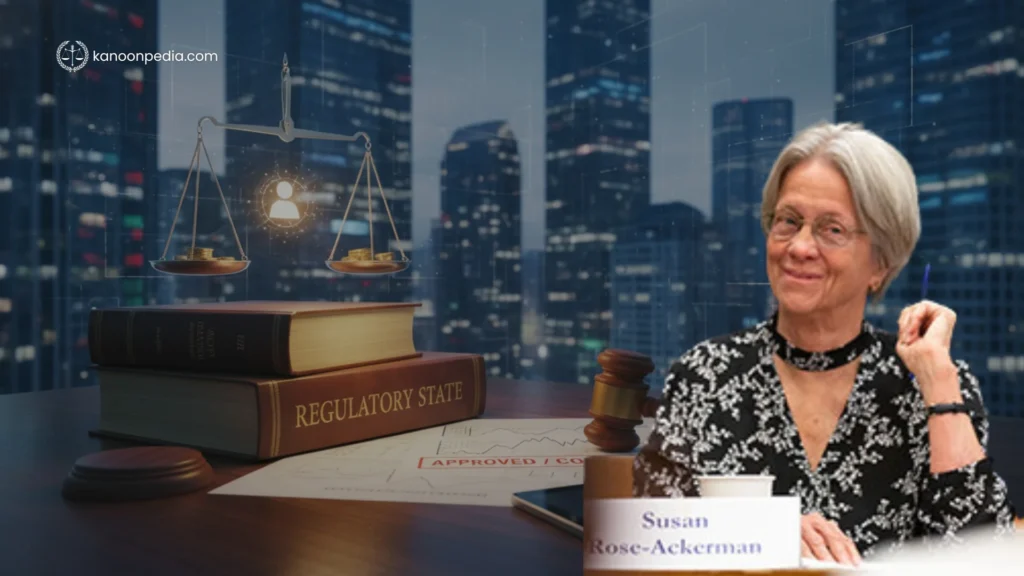
Susan Rose Ackerman, a prominent scholar at Yale University, has spent decades studying how governments regulate industries and what happens when this system goes wrong. Her work on The Regulatory State helps us understand one of the most important shifts in modern governance—how democracies now rely heavily on regulatory agencies rather than traditional lawmaking. Her research has become essential reading for anyone who wants to understand government, law, or how society works.
In this guide, we’ll explore The Regulatory State by Susan Rose-Ackerman, break down complex ideas into simple terms, and show you why this matters to your life.
Table of Contents
What Is The Regulatory State?
The Regulatory State refers to the way modern governments work. Instead of making every single rule through the legislature (the group of elected representatives who pass laws), governments now create specialized agencies that make and enforce rules. These agencies handle everything from environmental protection to financial services to food safety.
Susan Rose-Ackerman explains that The Regulatory State is fundamentally different from earlier forms of government. Previously, governments expanded their power by spending money (building schools, roads, hospitals) or collecting taxes. Today, governments expand their influence mostly through regulation—creating rules that private companies and individuals must follow.
For example, the Environmental Protection Agency (EPA) in the United States sets rules about air and water quality. These rules carry the force of law, even though the EPA is not the elected legislature. This shift represents The Regulatory State in action.
Why Do We Need The Regulatory State?
Modern economies are incredibly complex. A legislature cannot possibly write detailed rules for every situation that might come up in healthcare, finance, transportation, or the environment. So, governments delegate authority to specialized agencies. These agencies have experts who understand specific industries and can create detailed, practical rules.
Rose-Ackerman‘s analysis of The Regulatory State shows that this arrangement serves important purposes:
- Efficiency: Agencies can make decisions faster than legislatures
- Expertise: Technical experts create better rules than generalist politicians
- Responsiveness: Rules can be updated as industries and problems change
- Protection: Regulations protect consumers, workers, and the environment from harm
However, Susan also identifies serious problems with how The Regulatory State functions in practice.
The Core Problem: Regulatory Capture
One of Ackerman‘s most important contributions to understanding The Regulatory State is her analysis of a problem called “regulatory capture.”
What Is Regulatory Capture?
Regulatory capture happens when the agencies created to regulate industries become controlled by those same industries instead. Imagine a referee in a soccer game who gradually starts favoring one team because they pay him money—that’s capture. The referee was supposed to be neutral, but now he serves the team’s interests instead of the game’s fairness.
Susan Rose-Ackerman explains that regulatory capture undermines the entire purpose of The Regulatory State. Instead of protecting the public, agencies start making rules that benefit the industries they regulate. This happens in different ways:
Political Corruption: Industry leaders give money to politicians who control the regulatory agencies, so those politicians appoint people favorable to industry interests.
Administrative Corruption: Industry representatives bribe or influence regulators directly to create favorable rules or ignore violations.
Information Capture: Industries provide most of the information that regulators use to make decisions, so the regulators see only the industry’s perspective.
Revolving Door: Regulators leave their government jobs to work for the industries they just regulated, creating a career incentive to keep industry happy while in government.
Real-World Examples
Rose-Ackerman‘s research shows that regulatory capture happens everywhere. In the financial industry before 2008, banking regulators became too friendly with banks and failed to prevent the reckless behavior that caused the economic crisis. In environmental regulation, sometimes agencies that should protect nature end up protecting polluters’ profits instead.
How Ackerman Analyzes The Regulatory State
Susan Rose-Ackerman‘s approach to studying The Regulatory State is both practical and theoretical. She asks critical questions:
Delegation and Democratic Accountability
When governments delegate power to agencies, they’re giving up some democratic control. Elections determine who our legislators are, but who controls the regulators? Rose-Ackerman argues that this raises a serious problem for democracy. She calls this “the accountability deficit”—regulators are often appointed, not elected, and cannot be easily removed by voters.
Rose-Ackerman‘s solution involves making The Regulatory State more accountable through:
- Transparency: Public hearings and open records so citizens know what regulators are doing
- Reason-giving: Regulators must explain their decisions in writing
- Public participation: Citizens and interest groups get chances to comment on proposed rules
- Judicial review: Courts can check if regulators exceeded their authority
These ideas have influenced real policies, particularly the U.S. Administrative Procedure Act, which requires agencies to hold public hearings and consider public comments before making major rules.
The Role of Cost-Benefit Analysis
Susan Rose-Ackerman examines whether regulatory agencies should use cost-benefit analysis—basically, calculating whether the benefits of a rule outweigh its costs. Some people support this to prevent wasteful regulation. Others worry it undervalues things like clean air or safe workplaces that are hard to quantify in dollars.
Rose-Ackerman‘s nuanced analysis of The Regulatory State notes that cost-benefit analysis is useful but shouldn’t be the only tool. Different types of policies require different approaches. Health and safety rules might prioritize protection over cost considerations.
Independent Agencies
Rose-Ackerman analyzes why governments create “independent” agencies—regulators that operate somewhat outside the control of presidents or prime ministers. These agencies are supposed to be insulated from political pressure so they can make objective decisions based on expertise.
But Rose-Ackerman questions whether independence always helps. Sometimes, independence means regulators are even less accountable to elected officials and the public. The Regulatory State, she argues, needs to balance independence with accountability.
The Regulatory State Around the World
Ackerman‘s research examines The Regulatory State not just in America but globally. Her comparative studies show that different countries handle regulation very differently.
The United States
The U.S. has relatively strong procedural requirements for regulation. The Administrative Procedure Act (APA) requires agencies to give public notice, hold hearings, and justify their decisions. This makes it harder for regulatory capture to happen in hidden ways—though it still happens.
European Countries
Rose-Ackerman notes that European regulatory processes are often less transparent than America’s. European agencies sometimes make decisions with less public input. This can make them more efficient but also creates more opportunities for capture. Rose-Ackerman‘s research suggests that stronger procedural requirements—like those in The Regulatory State framework of the U.S.—might help protect against capture.
Developing Countries
Susan Rose-Ackerman‘s analysis of The Regulatory State in developing nations reveals that capture is often even more severe there. Weak institutions, limited transparency, and poverty make regulators vulnerable to bribery. She argues that countries should strengthen transparency and public participation to combat this.
Ackerman on Corruption and Regulation
Beyond just examining The Regulatory State as a system, Rose-Ackerman has written extensively about how corruption damages it. She explains corruption not as just a moral failing but as an economic problem that harms entire societies.
Susan Rose-Ackerman argues that corruption in The Regulatory State is particularly damaging because:
- It undermines rule of law (if rules only apply to those who can’t afford to break them, law loses meaning)
- It distorts competition (companies that are good at bribing prosper, not companies that are good at serving customers)
- It reduces government effectiveness (resources get diverted to corrupt officials instead of public services)
- It harms the poor most (wealthy interests can afford corruption; poor people cannot)
Rose-Ackerman rejects arguments that corruption is somehow necessary or justified. Some people argue that corrupt payments help overcome “unfair” regulations. Susan Rose-Ackerman firmly counters that this logic destroys the foundations of honest government.
Reforming The Regulatory State
Susan Rose-Ackerman doesn’t just identify problems with The Regulatory State; she proposes reforms. Her ideas have influenced both academics and policymakers.
Greater Transparency
Rose-Ackerman advocates for making regulatory processes more open. Agencies should publish meeting minutes, fund their analysis in public-accessible formats, and explain their decisions clearly. This makes capture harder because corrupt dealings happen in darkness.
Stronger Accountability Mechanisms
The Regulatory State should include independent bodies that check whether agencies are doing their jobs fairly. Ackerman proposes audits, inspections, and review processes that verify agencies are not captured.
Public Participation
Susan Rose-Ackerman‘s analysis shows that when ordinary citizens, environmental groups, labor unions, and consumer advocates can participate in regulatory decisions, capture becomes harder. Groups with differing interests can challenge industry-friendly proposals.
Limiting Conflicts of Interest
Rose-Ackerman recommends “cooling-off periods” before regulators can work for the industries they regulated. She also suggests rotating regulators so they don’t spend their entire careers in cozy relationships with the same industry.
Technical Expertise + Democratic Values
Rose-Ackerman argues that The Regulatory State must combine technical expertise with democratic values. Experts should make decisions, but through processes that respect public input and protect individual rights.
Why The Regulatory State Matters to You
You might think The Regulatory State is just academic theory, but it affects your daily life profoundly.
Food Safety: Regulatory agencies inspect restaurants and food companies to keep food safe. Without The Regulatory State, companies might cut corners and poison people.
Product Safety: Toys, cars, medicines—all regulated. Agencies test these products and ensure they don’t harm us. If capture occurs, companies might hide dangers.
Environmental Protection: Clean air and water come from environmental regulations. If agencies are captured, pollution increases, harming your health.
Financial Security: Bank regulators are supposed to prevent banks from taking reckless risks with your money. When capture happens, crises occur.
Work Safety: Occupational safety agencies set rules about working conditions. Capture means workers face danger.
Understanding The Regulatory State by Susan Rose-Ackerman helps you recognize how government actually works and where problems might arise.
Frequently Asked Questions
What is the main idea of The Regulatory State by Susan Rose-Ackerman?
The Regulatory State by Susan Rose-Ackerman explains how modern governments rely on specialized agencies to make and enforce rules rather than making every rule through legislatures. Ackerman emphasizes that while this system is necessary and useful, it faces serious problems including regulatory capture—where agencies serve industry interests instead of the public. Her work examines how to make The Regulatory State more democratic and accountable while preserving expert decision-making.
What is regulatory capture, and why does Susan Rose-Ackerman see it as a problem?
Regulatory capture occurs when industries gain control over the agencies supposed to regulate them, causing those agencies to serve industry interests instead of public interests. Rose-Ackerman sees this as fundamentally dangerous because it undermines the purpose of The Regulatory State, harms competition, damages rule of law, and impacts ordinary people through unsafe products, pollution, and financial instability.
How can we prevent regulatory capture in The Regulatory State?
Susan Rose-Ackerman recommends several strategies: greater transparency in regulatory processes, stronger accountability mechanisms, meaningful public participation in rulemaking, cooling-off periods before regulators can work for regulated industries, rotation of regulators, and judicial review of agency decisions. She emphasizes combining technical expertise with democratic procedures.
Does Susan Rose-Ackerman think The Regulatory State is good or bad?
Rose-Ackerman believes The Regulatory State is necessary for modern societies—complex economies cannot function without regulatory agencies. However, she is critical of how it actually operates in practice. She advocates for reforming The Regulatory State to make it more accountable and resistant to capture, not abolishing it.
How is The Regulatory State different in different countries?
Susan Rose-Ackerman’s research shows that countries handle regulation very differently. The United States has relatively strong procedural requirements for agency decisions. European countries often have less transparent processes. Developing countries face more severe capture problems due to weak institutions. Rose-Ackerman suggests that stronger procedures—like those in The Regulatory State framework—help protect against corruption and capture globally.
Why is Susan’s work on The Regulatory State important?
Rose-Ackerman combines rigorous economic analysis with real-world observations of how government actually operates. Her research has influenced policy reforms, academic thinking, and international development programs. By examining The Regulatory State carefully, she helps societies design regulatory systems that actually serve the public interest.
Can The Regulatory State work without corruption and capture?
Susan Rose-Ackerman acknowledges that perfect systems don’t exist, but she firmly believes that regulatory capture can be substantially reduced through proper institutional design. Transparency, accountability, public participation, and regular oversight make capture much harder. However, vigilance is required—capture tends to reappear if societies become complacent.
What would happen without The Regulatory State?
Without regulatory agencies, modern economies would face serious problems. No one would check food safety, products could harm consumers without consequence, pollution would run rampant, banks could engage in reckless behavior, and workers would face dangerous conditions. The Regulatory State exists because markets alone cannot solve these problems. Susan Rose-Ackerman argues the question isn’t whether to have The Regulatory State but how to make it work better.
Conclusion
The Regulatory State by Susan Rose provides crucial insights into how modern governments actually work and where serious problems arise. Susan‘s analysis shows that while specialized regulatory agencies are necessary, they face constant pressure toward capture—where they serve industry instead of the public.
Understanding The Regulatory State helps you see government through new eyes. It’s not just about laws passed by legislatures; it’s about thousands of rules made by agencies daily. Rose-Ackerman‘s work on The Regulatory State demonstrates that these rules profoundly affect your health, safety, environment, and financial well-being.
Susan Rose-Ackerman offers hope through her reform proposals. By increasing transparency, public participation, accountability, and judicial review, we can make The Regulatory State serve the public rather than narrow interests. Her research shows that democracy isn’t automatic—it requires constant attention to institutional design and oversight.
The next time you hear news about a regulatory agency, remember The Regulatory State framework from Susan Rose-Ackerman‘s work. Ask yourself: Is this agency truly serving the public, or has it been captured by the industry it regulates? Is the decision transparent and well-justified, or hidden behind closed doors? These questions matter because The Regulatory State shapes the world you live in every single day.
About author
Susan Rose-Ackerman is Henry R. Luce Professor Emeritus of Jurisprudence at Yale Law School and Political Science. Holding a Ph.D. in economics from Yale (1970), she specializes in comparative administrative law, corruption’s political economy, and regulatory policy. Key works include Corruption and Government (2016) and Democracy and Executive Power (2021).
also read
- Module I: The Discipline of Comparative Law (Sessions 1-7)
- Session 1
- Session 2
- Session 3
- Session 4
- Sessions 5
- Session 6
- Session 7
- Module II:
- Module II: Methodology in Comparative Public Law (Sessions 8-14)
- Session 8
- Session 9
- Session 10
- Session 11
- Mark Tushnet, ‘Some Reflections on Method in Comparative Constitutional Law’, pp. 67-83 in Sujit Choudhry (ed.), The Migration of Constitutional Ideas (Cambridge University Press, 2006). IMP
- Vicki C. Jackson, ‘Comparative Constitutional Law: Methodologies’, pp. 54-74 in Michel Rosenfeld & Andras Sajo (eds.), The Oxford Handbook of Comparative Constitutional Law (Oxford University Press, 2012).
- Session 12
- Session 13
- Session 14
- Module III:
- Module III: Systems of Governance (Sessions 15-22)
- Session 15
[…] Susan Rose-Ackerman, ‘The Regulatory State’, pp. 671-688 in The Oxford Handbook of Compa… […]