
Imagine you’re studying how different countries solve similar legal problems. One country uses Rule A, while another uses Rule B. How do you compare them fairly? This is where the functionalist heritage comes in. The functionalist heritage represents one of the most influential approaches in comparative law—a method that has shaped how legal scholars across the world understand and compare different legal systems. Whether you’re interested in law, economics, or understanding how societies function, grasping the functionalist heritage is essential to understanding modern legal thinking.
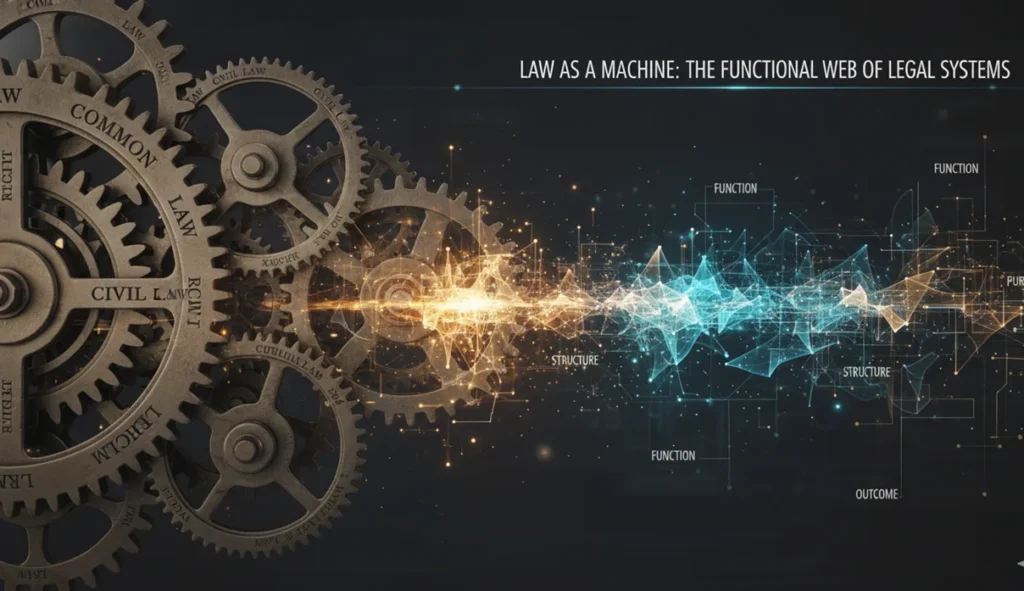
At its core, the functionalist heritage teaches us that legal systems around the world face essentially the same problems, even if they solve them through very different methods. Michele Graziadei, a renowned legal scholar, explores this concept extensively in his work on comparative legal studies. He explains that the functionalist heritage isn’t just about comparing laws—it’s about understanding how laws actually work in society and why different countries might reach similar outcomes using completely different legal tools.
Table of Contents
The Roots of the Functionalist Heritage: How It All Started
The functionalist heritage didn’t appear overnight. Its roots go deep into legal history. Ernst Rabel, a brilliant German legal scholar, made a groundbreaking observation in the late nineteenth and early twentieth centuries. He noticed that characterization problems in conflict of laws (private international law) were causing real difficulties. When different countries applied the same conflict-of-laws rules, they often reached different results because they interpreted legal categories differently.
Rabel had a revolutionary idea. Instead of focusing on abstract legal categories—like “contract” or “succession”—lawyers should look directly at the facts of life. This simple shift in perspective became the foundation of the functionalist heritage. Michele Graziadei emphasizes how Rabel’s insight fundamentally changed comparative law methodology. By looking at facts rather than categories, comparatists could cut through the confusing terminology used by different legal systems and find what really mattered: How do societies actually solve common problems?
This approach influenced generations of comparative lawyers. By the mid-twentieth century, Rudolf Schlesinger launched a massive project comparing contract formation across different legal systems. To make this work, Schlesinger had to ask questions in purely factual terms, not in abstract legal language. If he’d asked “What is an offer under your law?” his colleagues from India might interpret it differently than his colleagues from Italy. So instead, he described actual fact situations and asked how different legal systems would handle them. This was the functionalist heritage in action, and it proved incredibly successful.
Understanding the Functionalist Method: The Core Principles
Michele Graziadei explains that the functionalist heritage rests on several key principles. First and foremost is the principle of functionality: only things that serve the same function are truly comparable. This might sound obvious, but it revolutionized how lawyers think about comparison.
Consider a concrete example. England has trusts, while France doesn’t use the word “trust.” For centuries, this made English and French property law seem completely different. But a functional approach asks: Does French law have something that serves the same function as English trusts? Yes! French law has legal arrangements that accomplish similar goals. Once you realize this, you can compare the two systems meaningfully. The functionalist heritage teaches us to look past different names and legal categories to find functional equivalents.
Konrad Zweigert and Hein Kotz, two legal giants, summarized the functional method brilliantly. They argued that comparatists must eradicate their preconceptions and frame questions in purely practical, functional terms. The functionalist heritage insists that we shouldn’t assume our own legal system’s categories are universal. A practicing lawyer from India might not understand a question framed in German legal terminology. But ask about a real-life situation—a transaction, a dispute, a need—and suddenly the comparison becomes clear and productive.
Michele Graziadei emphasizes another crucial aspect: the functionalist heritage requires what comparatists call a “presumption of similarities” (praesumptio similitudinis). This means we should assume that developed nations solve practical legal problems in similar ways because they face similar needs. This assumption helps guide research and prevents comparatists from drowning in endless differences.
How the Functionalist Heritage Works in Practice
Let’s see the functionalist heritage in action. Suppose a merchant in Japan wants to sell goods to a buyer in Germany. What happens if the buyer doesn’t pay? Both countries have rules addressing this, but they use different names, different procedures, and different doctrines. Without a functional approach, a Japanese lawyer might conclude German law is completely foreign and incomprehensible.
But using the functionalist heritage, the lawyer asks: What problem are both systems trying to solve? Answer: They both want to protect sellers who deliver goods before receiving payment. Now the comparison becomes meaningful. Maybe Japan uses remedy X while Germany uses remedy Y, but both serve the same function. By focusing on what each system actually does rather than what it calls things, the functionalist heritage reveals deep similarities beneath surface differences.
This method has proven incredibly powerful. The Common Core of European Private Law project, launched in the mid-1990s and enriched with insights from Michele Graziadei’s work on the functionalist heritage, demonstrates this. Scholars using this revised functional approach discovered that European countries solve similar private law problems in remarkably consistent ways, even though their legal systems looked completely different when viewed through traditional categories.
The Strengths of the Functionalist Heritage
Why has the functionalist heritage remained so influential? Several reasons stand out. First, the functionalist heritage actually works. It produces real insights about how different legal systems address common challenges. It helps lawyers understand foreign law and shows that similarity often hides beneath different terminology and doctrines.
Second, the functionalist heritage is practical. Judges, legislators, and lawyers use this approach instinctively. When drafting commercial legislation, modern legislators worldwide think functionally—they ask “What problem does this solve?” rather than “Does this match traditional categories?” European Union legislation, for instance, is increasingly written in functional terms precisely because the functionalist heritage shows this approach is effective and creates clarity across different member states.
Third, the functionalist heritage breaks down conceptual barriers. It shows that legal categories are just human constructs, not eternal truths. This liberating insight allows lawyers to see that different countries aren’t locked into completely separate worlds. Michele Graziadei notes that understanding the functionalist heritage helped twentieth-century legal thinking escape from rigid formalism and conceptualism that had dominated the nineteenth century. By focusing on what law actually does rather than what it claims to be, the functionalist heritage brought realism into legal scholarship.
The Limitations and Criticisms of the Functionalist Heritage
However, the functionalist heritage isn’t perfect. Critics have identified real problems. One major criticism: the functionalist heritage sometimes ignores important context. By stripping away local culture, history, and values to focus only on function, does it miss something essential about law?
For instance, many legal systems regulate family law and succession quite differently from commercial law. Why? Not because they don’t understand functionality, but because these areas carry strong moral, religious, and cultural significance. The functionalist heritage assumed that less politically charged areas like contract law would show more similarity across systems, but even that assumption has been questioned.
Michele Graziadei himself acknowledges that the functionalist heritage has limitations. It tends to be rule-centered—focusing on operative rules while ignoring broader legal culture, implicit assumptions, and tacit knowledge that shapes how law actually functions in society. A functional comparison might show that German contract law and French contract law reach similar results in similar situations. But that comparison might miss the different ways German judges think about contracts compared to French judges, different professional training, different client expectations, and different cultural understandings of what a contract means.
Another concern: the functionalist heritage can create a false sense of uniformity. It might suggest that different countries solve problems the same way, when in fact they reach similar results through very different paths for very different reasons. This matters enormously for lawyers trying to actually use comparative law for law reform or international transactions.
The Functionalist Heritage and Legal Transplants
An important debate surrounds the functionalist heritage and legal transplants—the movement of laws from one country to another. Scholar Alan Watson argued that legal systems constantly borrow from each other, and this borrowing drives most legal change. But others, particularly Pierre Legrand, argued that you can’t really transplant law because law is too embedded in culture.
The functionalist heritage offers useful insights here. If two countries have functionally equivalent solutions to the same problem, borrowing becomes easier and more successful. But if a country tries to transplant a law that served a different function, or that doesn’t address a real local need, the transplant might fail. Michele Graziadei’s analysis of the functionalist heritage shows how understanding function helps explain both successful and failed legal transplants.
This matters today more than ever. Countries worldwide are adopting laws from other nations—sometimes wisely, sometimes not. Understanding the functionalist heritage helps policymakers evaluate whether a foreign law will actually work in their context. If it serves the same function and addresses the same problem, the transplant has a better chance of succeeding.
The Evolution of the Functionalist Heritage
The functionalist heritage didn’t stop developing in the twentieth century. Contemporary scholars have refined and revised it. Michele Graziadei, along with other modern comparatists, has explored how the functionalist heritage must account for the multiplicity of factors affecting law—not just function, but also legal formants (the different sources and influences that create law), implicit assumptions, professional ideologies, and cultural context.
Modern versions of the functionalist heritage try to preserve what works—the ability to compare across systems by focusing on what law does—while adding nuance about how function operates within cultural and historical contexts. This refined approach recognizes that legal systems are more complex than the original functional method suggested, but it maintains the core insight that functionality remains a powerful tool for understanding law.
Why the Functionalist Heritage Matters for Today’s World
In our interconnected world, understanding the functionalist heritage has become more important than ever. International commerce, human rights law, environmental regulation, and technology law all require comparatists to understand how different countries solve common problems. The functional approach provides a language and method for this essential conversation.
Moreover, functionalist heritage helps combat ethnocentrism. When Western lawyers studied non-Western legal systems, they often concluded these systems were primitive or irrational because they used different categories and methods. Understanding the functionalist heritage teaches us to ask: “What function does this serve?” instead of “Why isn’t this like our law?” This more respectful approach to legal comparison is urgently needed as law becomes increasingly global.
As artificial intelligence, climate change, and international trade create new legal challenges, countries must learn from each other. The functionalist heritage provides the intellectual tools to do this effectively. By asking how different legal systems address similar problems, lawyers can identify best practices, avoid mistakes, and create more effective solutions.
Key Takeaways About the Functionalist Heritage
The functionalist heritage is really about seeing past superficial differences to understand deeper similarities. It recognizes that while legal systems use different terminology and categories, they often address the same fundamental challenges. Michele Graziadei’s scholarly work explains that the functionalist heritage represents a way of thinking about law that emphasizes what law does in society rather than what it calls itself.
For law students, young professionals, and anyone interested in understanding how the world’s legal systems work, the functionalist heritage provides invaluable lessons. It teaches critical thinking about law, shows how to learn from other systems, and reveals that law is fundamentally practical—concerned with solving real-world problems, not just applying abstract principles.
Frequently Asked Questions
What exactly is the functionalist heritage in simple terms?
The functionalist heritage is a method for comparing laws across different countries. Instead of getting confused by different legal terms and categories, it focuses on what laws actually do to solve practical problems. If two countries solve similar problems the same way, they can be meaningfully compared, even if they use completely different terminology.
Who is Michele Graziadei and why is he important to this topic?
Michele Graziadei is a leading comparative law scholar who has written extensively about the functionalist heritage. His work explores both the strengths and weaknesses of the functional method, and he’s helped shape how modern comparative lawyers understand and apply functional analysis. His scholarship bridges classical and contemporary approaches to functionalist heritage.
Why couldn’t comparatists just compare laws using legal categories and terms?
Because the same word means different things in different countries! A “contract” in English law isn’t identical to a “contrat” in French law. Using categories from your own legal system prevents you from understanding foreign systems. The functionalist heritage solves this by focusing on the practical problem being solved rather than the legal category used.
Is functionalist heritage still used today?
Absolutely. It remains one of the primary methods in comparative law. The European Union’s legal development, international commercial law, and human rights law all rely on functional analysis. However, modern applications recognize that function must be understood within cultural and historical context.
What’s the difference between legal transplants and functionalist heritage?
Legal transplants are when a country adopts laws from another country. The functionalist heritage is a method for understanding and comparing laws. But they’re related: functional analysis helps explain why some transplants succeed (because the law serves the same function) and others fail (because the function differs or the local problem is different).
Can functionalist heritage solve all legal comparison problems?
No. It works well for practical, less politically charged areas like commercial law, but struggles with family law, succession, and areas where moral and cultural values deeply influence law. Michele Graziadei acknowledges these limitations, arguing that the functionalist heritage must be supplemented with attention to broader legal culture and context.
How does the functionalist heritage relate to understanding different countries’ legal systems?
It’s fundamental. If you’re studying another country’s law, the functionalist approach teaches you not to judge it by your standards or expect it to match your categories. Instead, ask: “What problem does this solve? How effectively does it solve it? What does this tell me about my own legal system?” This mindset transforms how you learn about foreign law.
- Reading Plan:
- Module I: The Discipline of Comparative Law (Sessions 1-7)
- Session 1
- Session 2
- Session 3
- Session 4
- Sessions 5
- Session 6
- Session 7
- Module II:
- Module II: Methodology in Comparative Public Law (Sessions 8-14)
- Session 8
[…] Michele Grazidei, ‘The Functionalist Heritage’, pp. 100-130 in Comparative Legal Studies… […]
[…] Michele Grazidei, ‘The Functionalist Heritage’, pp. 100-130 in Comparative Legal Studies… […]
[…] Michele Grazidei, ‘The Functionalist Heritage’, pp. 100-130 in Comparative Legal Studies… […]
[…] Michele Grazidei, ‘The Functionalist Heritage’, pp. 100-130 in Comparative Legal Studies… […]
[…] Michele Grazidei, ‘The Functionalist Heritage’, pp. 100-130 in Comparative Legal Studies… […]